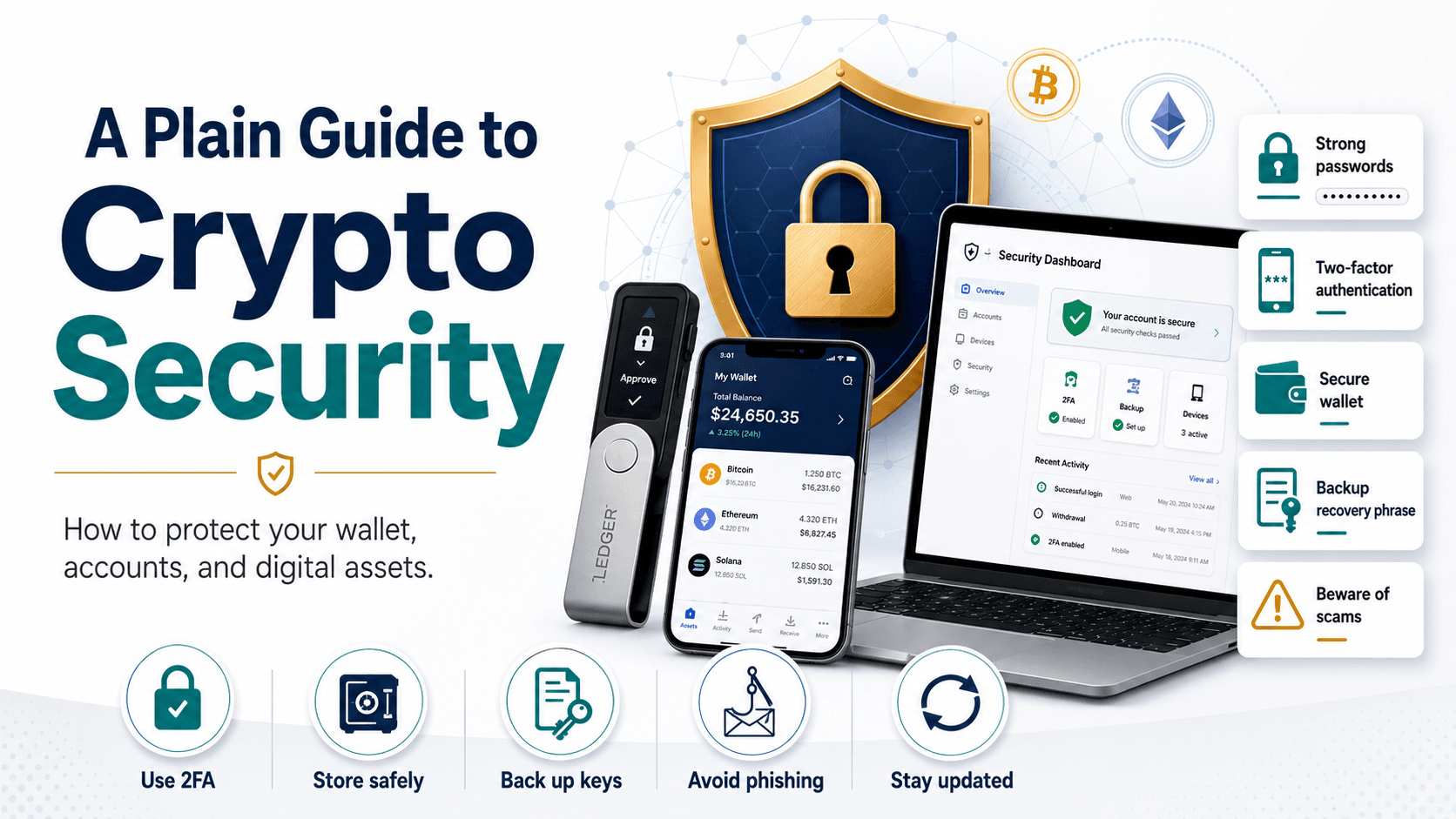
A Plain Guide to Crypto Staking
The idea of earning a return simply by holding a crypto asset sounds appealing, but it hides real and serious risks. This plain-English guide explains crypto staking.
Among the ways people are encouraged to use cryptocurrency, few sound more appealing than the idea of earning a reward simply for holding and committing a coin. This is the promise behind crypto staking, often presented as a way to make your crypto “work for you.” Yet the reassuring framing hides a more complicated and risky reality. Understanding what crypto staking actually involves, how it works, and the substantial risks it carries matters far more than the attractive headline returns that are so often advertised, and is essential before forming any view about it.
This guide explains crypto staking in plain, general terms. It covers what it is and the idea behind it, how it works, the different ways people do it, the rewards it offers, and, crucially, the serious risks involved. The aim is clear understanding, not investment guidance, and nothing here suggests you should participate; this remains a high-risk activity within an already volatile and lightly regulated space.
- What crypto staking is and the idea behind it
- How it works in principle
- The different ways people do it
- The rewards it offers
- The serious risks involved
- Why caution is essential
What crypto staking is
Crypto staking is the practice of committing, or “locking up,” a cryptocurrency to help support the operation of its underlying blockchain, in exchange for rewards. On certain blockchains, holders who stake their coins help the network process transactions and stay secure, and they may receive additional coins in return for doing so.
The attraction is obvious: it is presented as a way to earn a return on crypto you already hold, somewhat like earning interest. But that comparison is misleading in important ways, because the rewards, and the asset itself, carry risks that ordinary savings do not. Understanding crypto staking means looking past the “earn rewards” framing to what is really going on.
Tied to how some blockchains work
Crypto staking only exists because of how certain blockchains are designed. Some networks rely on participants committing coins as a way to validate transactions and secure the system, rewarding them for it. The technical details vary, but the core idea is that staked coins play a role in keeping the network running.
Not the same as earning interest
Although crypto staking is often compared to earning interest in a savings account, the resemblance is superficial and the differences are dangerous to ignore. A savings account holds stable money with strong protections; crypto staking commits a volatile asset in a risky, lightly regulated environment. The “yield” can be wiped out, and far more besides.
Where the rewards actually come from
It helps to ask where the rewards are really coming from, because that question cuts through a lot of marketing. In a genuine case, they are payments the network makes to those who help run it, often funded by newly issued coins or by fees. That is a real mechanism, but it is not the same as a business generating profit.
Crucially, rewards funded by issuing more coins can dilute the value of each coin, so a headline rate does not straightforwardly translate into being richer. And where a “reward” is really funded by new money flowing in rather than any real activity, it is fragile and can collapse, which is a pattern seen repeatedly in the riskier corners of this space.
How crypto staking works
The mechanics of crypto staking vary between networks and services, but the broad shape is consistent. Knowing roughly how it functions clarifies where the risks come from.
Committing your coins
At its core, crypto staking involves committing some of your coins to the network, often for a period during which you may not be able to freely use or sell them. This commitment is what supports the blockchain and earns rewards, but it also means your assets can be tied up when you might most want to move them.
GUIDE What Is Blockchain? Crypto staking is tied to how certain blockchains work, so the technology is worth understanding first.Earning rewards
In return for committing coins, participants may receive rewards, usually in the form of additional coins. The advertised rate can look attractive, but it is paid in a volatile asset whose value can fall, and it depends on the network and service continuing to function as promised, which is never assured.
Lock-up and unbonding periods
A defining feature of much crypto staking is that coins can be locked for a time, and there is often a delay, sometimes called an unbonding period, before you can access them again after deciding to stop. During such a delay, you may be unable to sell even as the price falls, a risk that catches many people out.
The illusion of being in control
One subtle trap is that committing coins can feel like a deliberate, careful act, which lends a false sense of being in control. In reality, once funds are locked, much of what happens next, the coin’s price, the network’s behaviour, a platform’s solvency, is entirely outside your hands, and you may not even be able to react.
This gap between the feeling of control and the reality of exposure is worth dwelling on. The decision to commit is yours, but almost everything that determines the outcome afterwards is not. Recognising that asymmetry is part of approaching the whole activity with clear eyes rather than the comfortable illusion that careful setup equals safety.
The different ways people do it
There is no single way to do crypto staking; several approaches exist, each with its own trade-offs and risks. Describing them is not recommending them.
Through an exchange or platform
Many people encounter crypto staking through an exchange or platform that offers it as a feature, handling the technical side for them. This is convenient, but it means trusting that platform with your coins, and platforms can fail, freeze withdrawals, or collapse, taking staked assets with them.
GUIDE Understanding Crypto Wallets How and where coins are held is central to the risks of crypto staking.Directly or through pools
More technical users may stake directly themselves, or join a pool that combines many people’s coins. Direct approaches give more control but demand more knowledge and carry their own technical risks, while pools introduce reliance on whoever runs them. Each route trades one set of risks for another.
Within DeFi services
Crypto staking also appears throughout decentralised finance, where it can be layered with lending and other activities promising high returns. This stacks the substantial risks of those services on top of staking’s own, an especially hazardous combination that attractive advertised yields can dangerously disguise.
Custody: who actually holds the coins
Cutting across all these approaches is a single question that matters enormously: who actually holds and controls the coins while they are committed? In some arrangements you keep control through your own wallet; in others, a platform takes custody, and you are trusting it not to fail, freeze access, or misuse the funds.
This custody question often matters more than the headline reward. Handing coins to a third party introduces exactly the kind of dependency that has cost people heavily when platforms have collapsed. Anyone weighing a particular route should be crystal clear about who can touch the coins, under what conditions, and what happens to them if that party runs into trouble, because by the time difficulties become visible it is often already too late to act.
This guide is general educational content, not financial, investment, or legal advice, and nothing here is a recommendation to engage in crypto staking or buy any crypto asset. Crypto staking is high-risk: the underlying coins are volatile and can fall sharply, staked funds can be locked when you most want to sell, rewards are not assured, and platforms can fail, freeze, or be hacked. Some networks also penalise stakers for certain failures. The space is lightly regulated, with limited protection or recourse. Never commit money you cannot afford to lose entirely, and consult a qualified, independent financial professional before any decision.
The rewards it offers
The rewards are the whole appeal of crypto staking, and they are what marketing emphasises. Understanding them honestly means seeing both what they are and what they are not.
Rewards paid in crypto
Crypto staking rewards are typically paid in more of the cryptocurrency being staked. This sounds straightforwardly positive, but it means your reward is itself a volatile asset; if its price falls, the value of your rewards falls with it, and can easily be outweighed by a drop in the coin’s price.
Advertised rates can mislead
Headline reward rates for crypto staking can look impressive next to ordinary savings, but the comparison is unfair. A high advertised rate reflects high risk, can change, and says nothing about whether the coin’s value will hold. A large percentage of a falling asset can still leave you far worse off overall.
GUIDE A Guide to DeFi Crypto staking often appears within DeFi, which carries its own substantial risks.Rewards are never assured
Whatever the advertised figure, crypto staking rewards are not promised. They depend on the network’s rules, which can change, and on the service or platform honouring them. Treating advertised rewards as reliable income is a mistake; they are uncertain returns on a risky activity, not a dependable yield.
Comparing rate against risk, not against savings
A more honest way to judge an advertised rate is to ask what risk is being taken to earn it, rather than comparing it to a savings account. A return that looks generous beside ordinary interest may look far less appealing once the chance of losing the whole stake is weighed alongside it.
In finance generally, higher potential returns come bundled with higher risk, and this corner is no exception, often in an extreme form. The right mental comparison is not “this pays more than my bank” but “what could I lose, and how likely is that, in exchange for this rate?” Framed that way, many advertised rates lose much of their shine, and the supposedly attractive opportunity starts to look like what it is: a bet, not a savings plan.
The serious risks of crypto staking
No honest guide to crypto staking can let the rewards overshadow the risks, which are serious, varied, and frequently underplayed. These are the most important part of the picture.
The coin’s value can collapse
The most fundamental risk is that the staked coin itself falls sharply in value. Crypto is extremely volatile, and a price crash can wipe out far more than any reward you earn. You can end up with more coins that are each worth much less, leaving you worse off despite “successful” staking.
Your funds can be locked
Because crypto staking often locks coins for a period, or imposes a delay before you can withdraw, you may be unable to sell precisely when you most want to, such as during a crash. This loss of access at the worst possible moment is a risk many underestimate until it hurts them.
Platform failure, hacks, and penalties
If you stake through a platform, its failure, freezing of withdrawals, or being hacked can mean losing your coins entirely. Some networks also impose penalties on stakers for certain failures, reducing your staked amount. Combined with light regulation and little recourse, these dangers mean staked money can simply disappear.
Approaching with caution
Given the risks, the responsible guidance on crypto staking is firmly cautious, and for most people, sceptical of the appealing “earn rewards” framing.
Not the safe yield it can appear
The most important habit is to resist treating crypto staking as a safe way to earn passive income. It is a risky activity layered on a volatile asset, not the equivalent of interest on savings. Anyone tempted should treat committed funds as money they could lose entirely, not as a secure deposit.
Understand before committing
If someone remains curious, deep understanding must come first: the specific coin, the network’s rules, the lock-up terms, and the platform or method involved. Even then the risks remain. The complexity of crypto staking means that what you do not understand, lock-ups, penalties, platform risk, can cost you dearly.
Independent guidance and scepticism
Anyone genuinely considering crypto staking should seek independent, qualified financial advice and be deeply wary of advertised returns, hype, and pressure to commit quickly. The loudest promoters of crypto staking often profit when others join, which is reason enough to step back and verify independently before committing anything.
Frequently asked questions
What is crypto staking in simple terms?
Crypto staking is committing, or locking up, a cryptocurrency to help support its underlying blockchain, in exchange for rewards usually paid in more of that coin. It only exists because some blockchains rely on participants committing coins to validate transactions and stay secure. Despite being framed like earning interest, it is a high-risk activity on a volatile asset, not a safe deposit.
How does crypto staking work?
You commit some of your coins to the network, often for a period during which you may not be able to freely use or sell them, and in return you may receive rewards in the form of additional coins. The coins help support the blockchain. There is frequently a lock-up, and sometimes a delay before you can access funds again after stopping, which can trap you during a price fall.
Is crypto staking like earning interest?
Only superficially, and the comparison is dangerous. A savings account holds stable money with strong protections, while crypto staking commits a volatile asset in a risky, lightly regulated environment. The rewards are paid in crypto whose value can fall, are not assured, and can be far outweighed by a drop in the coin’s price. It is not a safe, interest-like return.
Can I lose money with crypto staking?
Yes, in several ways. The staked coin can fall sharply in value, wiping out more than any reward; your funds can be locked when you most want to sell; the platform you use can fail, freeze withdrawals, or be hacked; and some networks penalise stakers for certain failures. With light regulation and little recourse, staked money can be lost entirely.
What does “locking up” coins mean?
It means committing coins for a period during which you generally cannot freely use or sell them, and often there is an additional delay before you can withdraw after deciding to stop. This is central to how crypto staking works, but it means you can be unable to act, for example to sell during a crash, exactly when you would most want to.
Are staking rewards assured?
No. Crypto staking rewards are never assured. They depend on the network’s rules, which can change, and on the platform or service honouring them, and they are paid in a volatile asset whose value can fall. A high advertised rate reflects high risk, not a dependable income, and should never be treated as reliable or promised.
Where can I learn more reliably?
Because crypto staking is complex, fast-moving, and surrounded by marketing that stresses rewards, neutral and independent sources are far safer than platforms or promoters. For any decision involving real money, a qualified, independent financial professional is the right starting point, and impartial educational references are preferable to material from anyone with something to sell.
The bottom line on crypto staking
Crypto staking is the practice of committing a cryptocurrency to help support its blockchain in exchange for rewards, usually paid in more of the same coin. It is widely promoted as a way to earn a return on crypto you already hold, somewhat like interest, but that comparison is misleading. The rewards are paid in a volatile asset, are not assured, and sit on top of all the risks of crypto itself.
Those risks are serious: the staked coin can crash, wiping out far more than any reward; funds can be locked exactly when you want to sell; platforms can fail, freeze, or be hacked; and some networks penalise stakers directly. In a lightly regulated space with little recourse, committed money can simply vanish. For most people, the wise stance is deep caution and scepticism toward the “earn rewards” framing, never treating crypto staking as safe passive income, treating any committed funds as potentially lost entirely, and seeking independent, qualified advice before acting.
This sits alongside the wider context in our blockchain guide. For a neutral, broader reference on crypto and finance concepts, Investopedia is a useful starting point, but for any decision involving your own money, an independent, qualified financial professional is the source that counts.
Crypto staking commits a cryptocurrency to support its blockchain in exchange for rewards paid in more of that volatile coin. It is promoted like interest but is far riskier: the coin can crash, funds can be locked when you want to sell, platforms can fail, and rewards are not assured. Treat committed money as potentially lost entirely.
Educational content only, not financial advice. Ladabo publishes research-based guides to help you understand crypto staking and make your own informed decisions; we do not provide individual financial or investment advice, and nothing here is a recommendation to engage in crypto staking or buy any crypto asset. Crypto is extremely volatile and high-risk, and staking carries additional risks of its own. Read our review methodology and disclaimer for how this content is produced and its limits.
Last reviewed: June 2026