A Plain Guide to DeFi
The idea of financial services without traditional middlemen is one of the most talked-about, and most misunderstood, corners of crypto. This plain-English guide explains DeFi.
Among the many ideas to emerge from the world of cryptocurrency, few are as ambitious, or as widely misunderstood, as decentralised finance. The promise is striking: financial services like lending, borrowing, and trading carried out without banks or brokers in the middle, run instead by software on a blockchain. This is what people mean by DeFi, and it has attracted enormous attention, vast sums of money, and no small amount of risk. Understanding what it actually is, and is not, matters before forming any view about it.
This guide explains DeFi in plain, general terms. It covers what it is and the ideas behind it, how it differs from traditional finance, the building blocks that make it work, what people use it for, and the substantial risks involved. The aim is a clear conceptual understanding, not investment guidance, and emphatically not a suggestion that you should participate; this is an unusually risky area that many people are right to avoid entirely.
- What DeFi is and the ideas behind it
- How it differs from traditional finance
- The building blocks that make it work
- What people use it for
- The substantial risks involved
- Why caution is essential
What DeFi is
DeFi, short for decentralised finance, refers to financial services built on blockchain technology that aim to operate without traditional intermediaries such as banks, brokers, or exchanges. Instead of a company processing transactions, the rules are written into software that runs automatically on a blockchain, in principle open to anyone with an internet connection.
The core ambition of DeFi is to recreate familiar financial activities, lending, borrowing, trading, earning interest, in a form that no single company controls. Where traditional finance relies on trusted institutions, DeFi tries to replace that trust with code and open networks. Whether it succeeds at this, and at what cost in risk, is the central question.
Decentralised, in theory
The “de” in DeFi stands for decentralised, the idea that no central authority is in charge. In practice, the degree of genuine decentralisation varies enormously between projects, and many are far more centralised than their branding suggests. The label alone tells you little about how a given service actually works.
Built on smart contracts
DeFi services are typically powered by smart contracts, programs that run on a blockchain and execute automatically when conditions are met. These contracts are what replace the manual processing a bank would do, and understanding them is central to understanding both the promise and the dangers of DeFi.
Where the idea came from
The concept grew out of the broader cryptocurrency movement, which set out to build money and financial tools that did not depend on banks or governments. Once programmable blockchains made it possible to write financial logic directly into code, enthusiasts began recreating lending, trading, and other services in that automated form.
The vision its proponents describe is sweeping: an open financial system anyone could access without permission. It is important to separate that aspiration from reality, however. A bold vision does not guarantee a safe or sound product, and much of what has been built in this space has proved fragile, risky, or simply unworkable in practice, whatever the rhetoric around it.
How it differs from traditional finance
To understand DeFi, it helps to contrast it with the traditional financial system most people already know. The differences are profound, and they cut both ways, bringing both novel possibilities and novel hazards.
No central intermediary
In traditional finance, a bank or broker sits in the middle, processing transactions and, crucially, taking responsibility. DeFi removes that intermediary, replacing it with software. This can mean fewer gatekeepers, but it also means there is often no institution to turn to if something goes wrong, a trade-off many underestimate.
GUIDE What Is Blockchain? DeFi is built on blockchains, so the underlying technology is worth understanding first.Open but unregulated
DeFi is often open to anyone, without the approval processes of traditional finance. But that openness usually comes without the consumer protections, oversight, and recourse that regulation provides. The absence of a safety net is one of the most important differences, and one of the most dangerous.
Automated, with no human judgement
Because DeFi runs on code, it executes exactly as programmed, without the human judgement, discretion, or ability to reverse mistakes that traditional institutions can offer. This automation is efficient when all goes well, but unforgiving when something goes wrong, since there is rarely anyone able to step in and help.
The flip side of openness
Supporters often praise the openness of this model: anyone, anywhere, can in principle use it without asking permission. That is genuinely novel, and for some people in some circumstances it may matter. But openness and safety are not the same thing, and the very features that make the system accessible also strip away the checks that protect ordinary users elsewhere.
A traditional bank account comes wrapped in regulation, identity checks, fraud monitoring, and the ability to dispute a transaction. Removing the gatekeepers removes those frustrations, but it removes the protections too. For most people most of the time, those protections are worth far more than the freedom from them, which is something the marketing rarely dwells on.
This guide is general educational content, not financial, investment, or legal advice, and nothing here is a recommendation to use DeFi or buy any crypto asset. DeFi is an exceptionally high-risk area: people can and do lose all the money they put in, through hacks, scams, software failures, and extreme price swings. It is also lightly regulated or unregulated in many places, meaning little or no protection or recourse. Never put in money you cannot afford to lose entirely, and consult a qualified, independent financial professional before making any decision.
The building blocks of DeFi
A handful of components recur across DeFi, and knowing them makes the landscape far less bewildering. None of this is an endorsement; it is simply what the machinery consists of.
Tokens and cryptocurrencies
DeFi runs on crypto assets, the tokens and cryptocurrencies that are lent, borrowed, traded, and staked within these services. Their values can be extraordinarily volatile, which is one reason DeFi carries such high risk. The assets moving through the system are themselves often deeply unstable.
GUIDE A Guide to Stablecoins Stablecoins are widely used in DeFi, though they carry their own serious risks.Smart contracts and protocols
The services themselves, often called protocols, are built from smart contracts that encode the rules for lending, trading, or other activities. Because everything depends on this code, any flaw or vulnerability in it can be catastrophic, and exploits of buggy contracts have led to enormous losses in DeFi.
Wallets and keys
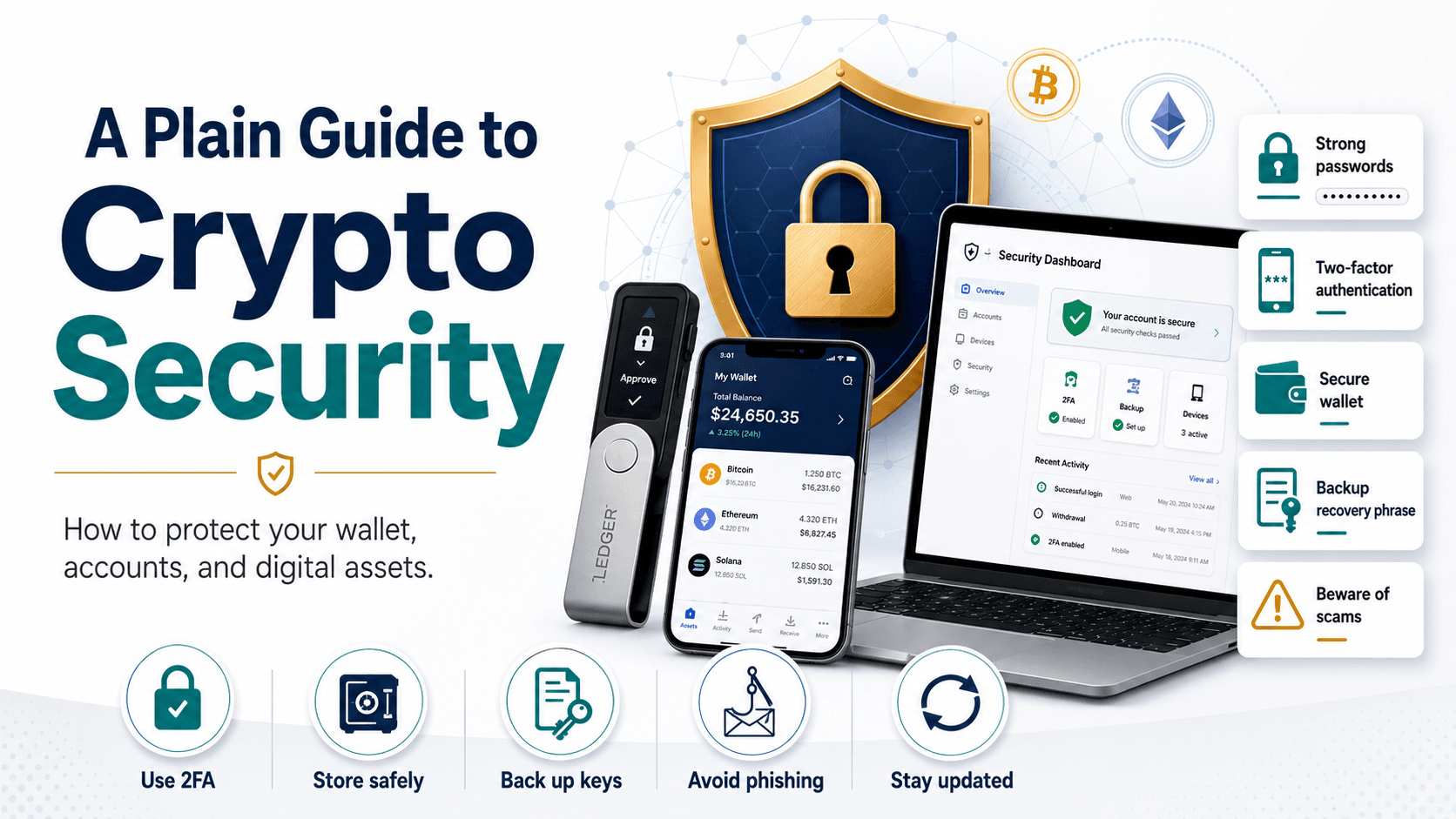
To use DeFi, people typically interact through a crypto wallet they control directly, holding their own keys. This self-custody means there is no institution safeguarding the funds, so losing your keys, or having them stolen, can mean losing everything, with no one to appeal to for recovery.
How the pieces fit together
In a typical interaction, a person connects a self-custody wallet to a service, approves an action, and the underlying code carries it out automatically, moving assets according to rules no human reviews in the moment. There is no clerk to catch an error and no manager to escalate to if something looks wrong.
This is worth picturing clearly, because it explains why mistakes here are so unforgiving. An accidental approval, a malicious service disguised as a legitimate one, or a single compromised key can drain funds in seconds, with the automated machinery executing the loss exactly as instructed. The convenience and the danger are two sides of the same automated coin.
What people use it for
DeFi is used for a range of activities that mirror traditional finance, though each carries its own amplified risks. Describing them is not recommending them.
Lending and borrowing
A large part of DeFi involves lending crypto assets to earn a return, or borrowing against crypto held as collateral. These activities can sound like familiar banking, but they operate without the protections of regulated lenders, and the volatility of the assets involved can trigger sudden, severe losses.
Trading and exchanges
DeFi also enables trading crypto assets directly through automated exchanges, without a traditional broker. While this offers a certain openness, it also exposes users to volatile prices, technical complexity, and the ever-present risk of interacting with a flawed or malicious service.
GUIDE Understanding Crypto Wallets Wallets are how people interact with DeFi, and securing them is critical.Earning yield
Much of the hype around DeFi has centred on earning high returns, often called yield, by supplying assets to various services. The advertised returns can look extraordinary, but they typically reflect extraordinary risk, and many who chased them have lost heavily. Unusually high promised returns are a warning sign, not a free lunch.
Why the returns can look so high
It is worth understanding why advertised returns are sometimes so eye-catching. In part they compensate for genuine, severe risk; in part they can be funded by new money flowing in rather than by any real, sustainable activity. A return that depends on a constant stream of newcomers is fragile by nature and can collapse abruptly.
Distinguishing a return that reflects real economic activity from one propped up by hype or inflows is extremely difficult, even for experts. For an ordinary person, the safest assumption is that an unusually generous headline number carries unusually serious risk, and that the figure on the screen is far from a promise of what you will actually keep.
The substantial risks of DeFi
No honest guide to DeFi can treat risk as a footnote. The hazards here are severe, varied, and often underestimated, and they are the single most important thing to understand.
You can lose everything
The blunt reality is that people lose money in DeFi regularly and sometimes entirely. Between price crashes, hacks, scams, and failed projects, the ways to lose are numerous and the protections few. Treating any money put into DeFi as money you could lose completely is the only safe assumption.
Hacks, bugs, and scams
Because DeFi depends on code and attracts large sums, it is a magnet for attackers. Vulnerabilities in smart contracts have been exploited for huge losses, and outright scams, projects designed to steal funds, are distressingly common. The technical complexity makes it hard for ordinary users to tell safe from dangerous.
Extreme volatility and no recourse
The crypto assets underpinning DeFi can swing wildly in value, wiping out positions quickly. And because the system largely lacks regulation and intermediaries, there is usually no one to complain to, no compensation scheme, and no way to reverse a loss. When money disappears in DeFi, it is typically gone for good.
Approaching it with caution
Given the risks, the most responsible guidance about DeFi is heavily weighted toward caution. For most people, the wisest course is simply to stay away.
It is not for most people
DeFi is complex, unregulated, and exceptionally risky, which makes it unsuitable for the vast majority of people, and especially for anyone who cannot afford to lose what they put in. There is no obligation to participate, and choosing to avoid DeFi entirely is a perfectly sensible, often wise, decision.
Education before anything else
For those who remain curious, learning comes first, long before any money is involved. Understanding the technology, the risks, and the specific service in question is essential, and even then the risks do not disappear. The complexity of DeFi means that what you do not understand can hurt you badly.
Independent, professional guidance
Anyone genuinely considering DeFi should seek independent, qualified financial advice first, and be deeply sceptical of hype, promises of easy returns, and pressure to act quickly. The loudest voices promoting DeFi often have something to sell, which is all the more reason to step back and seek impartial guidance.
Watch for pressure and hype
One of the clearest warning signs in this space is a sense of urgency: messaging that insists you must act now or miss out. Legitimate financial decisions rarely require haste, and pressure to rush is a classic tactic for pushing people past their better judgement before they have understood what they are doing.
The same caution applies to claims that something is a sure thing, to celebrity or influencer promotion, and to opportunities that arrive unsolicited. None of these is, in itself, proof of a scam, but each is a reason to slow down, ask harder questions, and verify independently. In an unregulated, fast-moving environment, scepticism is not cynicism; it is self-protection.
Frequently asked questions
What is DeFi in simple terms?
DeFi, short for decentralised finance, refers to financial services like lending, borrowing, and trading built on blockchain technology and run by software rather than traditional intermediaries such as banks. The aim is to recreate familiar financial activities without a central company in control. It is an exceptionally high-risk area where people can and do lose everything they put in.
How is DeFi different from a bank?
A bank is a regulated intermediary that processes transactions, takes responsibility, and offers some protection and recourse. DeFi removes the intermediary, replacing it with automated code, which means fewer gatekeepers but usually no consumer protection, no human judgement, and no one to turn to if something goes wrong. That absence of a safety net is a crucial and dangerous difference.
Is DeFi safe?
No. DeFi is exceptionally risky. People lose money regularly through price crashes, hacks, software bugs, and outright scams, and because the system is largely unregulated, there is usually no protection or way to recover losses. Anyone involved should treat money put into DeFi as money they could lose entirely. For most people, avoiding it altogether is the safer choice.
Can you really earn high returns in DeFi?
Some services advertise very high returns, often called yield, but these typically reflect correspondingly high risk, and many people chasing them have lost heavily. Unusually high promised returns are a warning sign rather than a free opportunity. No return is ever assured, and the prospect of gains should never distract from the very real chance of losing everything.
What are smart contracts in DeFi?
Smart contracts are programs that run on a blockchain and execute automatically when their conditions are met. In DeFi they replace the manual processing a bank would do, encoding the rules for lending, trading, and other activities. Because everything depends on this code, a flaw or vulnerability in a smart contract can lead to catastrophic, irreversible losses.
Should I get involved in DeFi?
This guide cannot tell you that, and nothing here is a recommendation to participate. DeFi is complex, unregulated, and exceptionally risky, and for most people staying away entirely is a sensible choice. Anyone genuinely considering it should learn deeply first, never risk money they cannot afford to lose, and seek independent, qualified financial advice before doing anything.
Where can I learn more reliably?
Because DeFi is fast-moving, complex, and full of promotional hype, neutral and independent sources are far safer than the projects themselves or anyone trying to sell you something. A qualified, independent financial professional is the right place to start for personal decisions, and reputable, impartial educational references are better than the marketing that surrounds much of this space.
The bottom line on DeFi
DeFi, decentralised finance, is an ambitious attempt to rebuild financial services like lending, borrowing, and trading on blockchains, run by smart contracts instead of banks and brokers. In place of trusted institutions it relies on code and open networks, which removes some gatekeepers but also removes the protections, human judgement, and recourse that regulated finance provides. The degree of genuine decentralisation varies widely, and the label alone reveals little.
Above all, DeFi is exceptionally risky. Hacks, software bugs, scams, extreme volatility, and the absence of any safety net mean that people lose money regularly, sometimes all of it, with no way to recover it. For the vast majority of people, the soundest approach is caution and, very often, simply staying away. Anyone genuinely curious should learn deeply first, treat any money involved as potentially lost entirely, and seek independent, qualified advice before acting, because in this space what you do not understand can cost you everything.
This sits alongside the wider context in our blockchain guide. For a neutral, broader reference on crypto and finance concepts, Investopedia is a useful starting point, but for any decision involving your own money, an independent, qualified financial professional is the source that counts.
DeFi is financial services run by blockchain code instead of banks, removing gatekeepers but also protections and recourse. It is exceptionally risky: hacks, scams, bugs, and volatility mean people regularly lose everything. For most, staying away is wisest. If curious, learn deeply, risk nothing you cannot lose, and seek independent advice.
Educational content only, not financial advice. Ladabo publishes research-based guides to help you understand DeFi and make your own informed decisions; we do not provide individual financial or investment advice, and nothing here is a recommendation to use DeFi or buy any crypto asset. Crypto and DeFi are extremely volatile and high-risk. Read our review methodology and disclaimer for how this content is produced and its limits.
Last reviewed: June 2026