What Is Bitcoin? A Plain Guide
Bitcoin is the original cryptocurrency — digital money with no bank behind it. This plain-English guide explains what Bitcoin is, how it works, what gives it value, and the real risks before you go near it.
Bitcoin is the asset that started the entire cryptocurrency story, and it remains the one everyone has heard of and few can explain. At its simplest, Bitcoin is digital money that no government, bank, or company controls — it runs on a shared network of computers instead. That idea is either thrilling or alarming depending on who you ask, and the truth sits somewhere in between. This guide explains, in plain English, what Bitcoin actually is, how it works under the hood, what gives it value, how people buy and store it, and — just as importantly — the serious risks to understand before you put in a single cent.
- What Bitcoin actually is
- How Bitcoin works under the hood
- What gives Bitcoin its value
- How to buy and store Bitcoin
- The real risks to understand first
- How Bitcoin compares with other crypto
What Bitcoin is
Bitcoin is a form of digital money created in 2009 that exists only electronically and operates without any central authority. As the FTC’s consumer guide to cryptocurrency describes it, Bitcoin is a well-known cryptocurrency — a digital currency you usually buy and hold using a phone, computer, or exchange, rather than a bank.
That independence is the whole point of Bitcoin. It was designed so that value could move between people directly, peer to peer, without needing a trusted middleman to approve or process the payment. Whether that is a feature or a flaw depends largely on how much you trust banks in the first place.
What makes it different from the money in your bank account is that no single institution issues it or controls it. There is no central bank printing more, and no company that can freeze the network. Instead, it runs on thousands of computers around the world that all keep a shared record of every transaction.
Because the record is spread across so many machines, there is no single point to attack or switch off, and no head office that can be pressured into reversing a payment. That resilience is a strength, but it is also why a mistake — sending to the wrong address — usually cannot be undone.
It helps to separate two things people lump together. Bitcoin, capitalised, usually refers to the network and system; a bitcoin, lowercase, is a single unit of the currency. You do not have to buy a whole one — each can be divided into very small fractions, so you can own a tiny slice.
This divisibility is part of why the headline price of a single coin need not put you off. You are not forced to buy in large, round amounts; you can hold a small fraction and still take part, which lowers the barrier to simply learning how it works.
How Bitcoin works
You do not need to be technical to grasp how Bitcoin works. Three ideas cover most of it: the ledger, mining, and the supply limit.
A shared ledger
Every transaction is recorded on a public, shared ledger called a blockchain — a chain of records copied across many computers so no single one can quietly alter it. This is what lets strangers transact without a bank in the middle. Our guide to the blockchain explains that underlying technology in depth.
The key thing to take away is that the ledger, not any company, is the source of truth. When you check a balance or send a payment, you are trusting math and a distributed network rather than an institution’s word, which is a genuinely new way for money to work.
Mining and confirmation
New transactions are grouped and confirmed by a process called mining, where computers compete to validate blocks and are rewarded with newly issued coins. Mining is also how new coins enter circulation, and it is what keeps the network secure without a central operator policing it.
A capped supply
Unlike traditional money, the total amount that can ever exist is capped by its code at a fixed number. No one can create more beyond that limit. This built-in scarcity is central to how supporters think about it, and it is one of the features that most clearly separates it from government-issued currency.
Supporters often compare this fixed limit to a digital form of gold: something that cannot be produced at will, and is therefore resistant to the kind of inflation that erodes ordinary currency. Critics counter that scarcity alone does not make something useful or stable, which is a fair point worth holding alongside the optimism.
What gives Bitcoin value
A reasonable question is why it is worth anything at all, given that you cannot hold it and no government stands behind it. The honest answer is that its value comes from a mix of factors, not a single guarantee.
Part of it is scarcity: the fixed supply means demand cannot be met by simply creating more. Part of it is utility, as a way to move value across borders without a bank. And a large part is simply belief — it is worth what people collectively agree to pay for it, which is why its price can move so dramatically.
That last point matters. It has no earnings, no dividends, and no underlying business, so its price rests heavily on supply, demand, and sentiment rather than fundamentals you can measure. That makes it very different from a stock or a bond, and far harder to value.
This is the hardest idea for newcomers to sit with. There is no balance sheet to analyse and no cash flow to discount, so traditional valuation tools barely apply. Price is driven by what the next buyer will pay, and that crowd psychology can swing from euphoria to fear remarkably fast.
How to buy and store Bitcoin
If you decide Bitcoin belongs in your plans, the practical steps are straightforward — but where you store it matters as much as buying it.
Buying through an exchange
Most people buy Bitcoin through a cryptocurrency exchange, where you create an account, add funds, and place an order much like a brokerage. You can buy a fraction rather than a whole coin, so you do not need a large sum to start. Stick to established, reputable platforms.
Before funding an account, it is worth checking that the platform is well regarded, has reasonable security, and is available in your country. Fees, withdrawal limits, and how easily you can move your coins out afterwards all vary, so a little research up front saves frustration later.
Storing it in a wallet
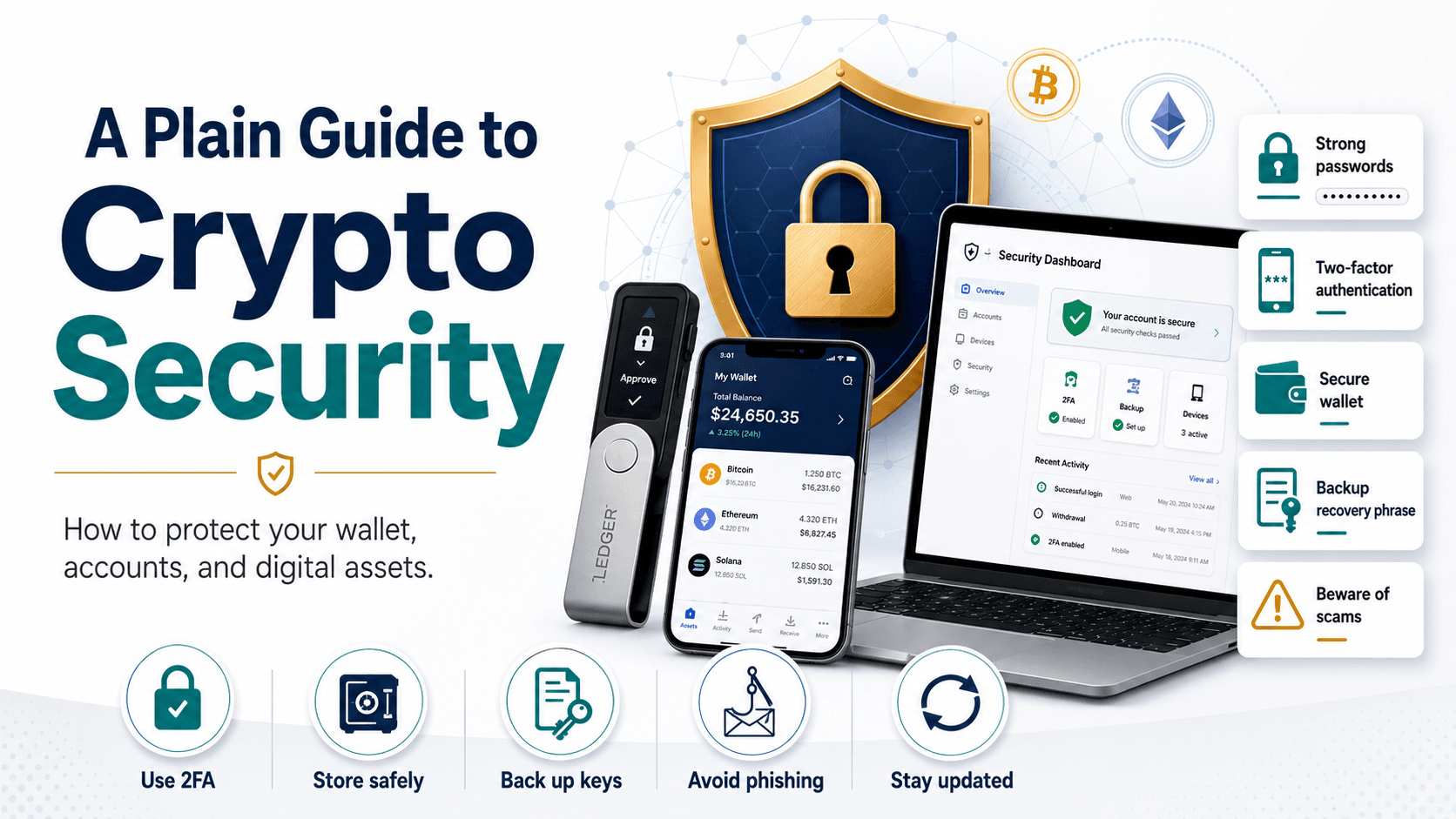
Once bought, it lives in a wallet — software or hardware that holds the keys controlling your coins. Leaving it on an exchange is convenient but means trusting that platform; moving it to your own wallet gives you control but also full responsibility. Our crypto wallet guide explains the trade-offs.
The phrase you will hear is “not your keys, not your coins.” It means that whoever controls the private keys controls the funds, so coins left on a platform are only as safe as that platform. For larger amounts, many people move holdings into a wallet they alone control.
Start small and learn
Because it is volatile and unfamiliar, a sensible approach is to start with only an amount you could lose without pain, while you learn how buying, storing, and securing it actually feels. Treat the first phase as education, not a position you are counting on.
The risks of Bitcoin
This is the section that matters most, and the one hype tends to skip. Bitcoin carries real, serious risks that you must weigh before putting in money.
Extreme volatility
Its price can rise or fall sharply in a single day. The CFTC’s advisory on virtual currency trading warns that these are highly volatile, speculative markets, and that you should only ever risk money you can afford to lose entirely.
To put the swings in perspective, drops of a large fraction of the value within months have happened more than once in its short history. Anyone holding has to be able to stomach that on paper without panic-selling, which is far harder in practice than it sounds when the numbers are real.
No safety net
Unlike bank deposits, it is not insured by a government scheme. If an exchange collapses, you are hacked, or you lose your wallet keys, there is usually no one to refund you and no way to reverse the transaction. The responsibility sits entirely with you.
This is a profound shift from the financial system most people know, where a bank or card provider can reverse fraud and a deposit scheme protects your balance. Here, those backstops simply do not exist, so prevention — strong security and caution — is the only real protection you have.
Scams and fraud
Crypto attracts fraud. The FTC warns that scammers favour Bitcoin precisely because payments are fast and irreversible. Be deeply sceptical of anyone promising high or certain returns, pressuring you to act fast, or asking to be paid in crypto — those are classic warning signs.
This guide is educational and general — it is not financial or investment advice. Bitcoin is a highly speculative, volatile asset, and you can lose some or all of the money you put in. Nothing here is a recommendation to buy. No one can promise a return on Bitcoin, and anyone who does is a red flag. For decisions about your own money, consider a qualified, regulated financial professional.
How to think about Bitcoin
If you do choose to hold any Bitcoin, a few principles keep it in proportion. The aim is to engage with it sensibly rather than emotionally.
It is easy to get swept up in stories of overnight fortunes, but those headlines hide the many who bought at a peak and sold at a loss. Keeping your exposure modest is what lets you stay curious about the technology without tying your financial wellbeing to its mood swings.
Treat it as a small, speculative slice of a wider plan, never the foundation. Most cautious approaches keep crypto to a portion small enough that a total loss would not derail your finances, with an emergency fund and other essentials handled first. It should be the risky edge, not the core.
It also helps to decide your reasons and rules in advance — why you are buying, how much, and what you will do if the price halves or doubles. Deciding while calm protects you from the panic-selling and fear-of-missing-out buying that hurt so many crypto holders. A plan beats a reaction.
Bitcoin vs other cryptocurrencies
Bitcoin was first, but thousands of other cryptocurrencies now exist. The CFTC’s digital assets resources give an official overview of this wider market. Knowing where it sits among them helps set expectations.
Bitcoin is generally seen as the most established and widely held, designed primarily as a store of value and a payment network. Others, such as Ethereum, were built to do more — running programs and applications, not just moving money. Our guide to what Ethereum is covers it in depth. Many smaller coins are far more speculative and short-lived than it is.
A useful instinct is extra caution as you move away from the largest, most established coins. The further down the list of thousands you go, the thinner the track record and the higher the chance a project simply fails or turns out to be a scam dressed up in technical language.
Here is the core distinction in one view. Treat it as a simple orientation, not a recommendation of any coin over another.
| Feature | Bitcoin | Other crypto |
|---|---|---|
| Launched | First, in 2009 | Mostly later |
| Main purpose | Store of value, payments | Varies widely |
| Supply | Capped | Often uncapped |
| Maturity | Most established | Ranges to very new |
Common Bitcoin myths
A few persistent myths cause confusion and bad decisions. Clearing them up helps you think straight.
“It’s completely anonymous”
Not quite. It is pseudonymous: transactions are public on the blockchain and tied to addresses, which can sometimes be linked to real identities. It offers privacy, not true anonymity, and many platforms require identity checks.
“You have to buy a whole one”
No. A bitcoin divides into very small units, so you can buy a tiny fraction. The headline price of one coin is not the minimum you can spend, which surprises many newcomers.
“It’s free money if you get in early”
This is the most dangerous myth. It has produced both large gains and devastating losses, and past price moves never promise future ones. Treating it as certain wealth is exactly the mindset scammers exploit.
The healthier framing is to treat any money you put in as money you are fully prepared to lose, and to be pleasantly surprised if it grows rather than devastated if it does not. That mindset is the difference between informed participation and gambling on hope.
Bitcoin FAQ
What is Bitcoin in simple terms?
Bitcoin is digital money that exists only electronically and runs on a shared network of computers rather than a bank. It lets people send value directly to each other, and its supply is capped by code. It is known for both its independence from banks and its sharp price swings.
Is Bitcoin a good investment?
That depends entirely on your goals and risk tolerance, and nobody can answer it for you. It is highly volatile and speculative, with no earnings behind it, so it carries real risk of loss. Many cautious investors treat it as a tiny, optional slice rather than a core holding.
How do I buy Bitcoin?
Most people use a reputable cryptocurrency exchange: create an account, add funds, and buy a fraction or whole coin. You can then leave it on the platform or move it to your own wallet for greater control. Start with a small amount while you learn how it works.
Can Bitcoin be converted to cash?
Yes. You can sell Bitcoin for traditional currency on an exchange and withdraw the proceeds to your bank, subject to fees and processing times. Be aware that selling can be a taxable event in many countries, so keep records of what you buy and sell.
Is Bitcoin safe?
The network itself has been robust, but holding it carries real risks: price volatility, no insurance, irreversible transactions, and the threat of scams or lost keys. It is not safe in the way a bank deposit is. Strong security habits and caution are essential.
Why does Bitcoin have value?
Its value comes from capped supply, its usefulness for moving value without a bank, and collective belief that it is worth holding. It has no earnings or assets behind it, so its price rests on supply, demand, and sentiment, which is why it moves so sharply.
Do I pay tax on Bitcoin?
In many countries, yes — selling, spending, or trading it can trigger a taxable gain or loss. Rules vary by country and change over time, so keep good records and check current local guidance. Tax software built for crypto can help track it accurately.
Can I lose all my money in Bitcoin?
Yes. It can fall sharply, an exchange can fail, or you can lose access to your wallet, and there is usually no recovery. This is why guidance consistently stresses risking only money you could afford to lose entirely.
The bottom line on Bitcoin
Bitcoin is the original cryptocurrency: digital money, capped in supply, run by a global network rather than a bank. It is genuinely innovative and genuinely risky — capable of sharp gains and equally sharp losses, with no safety net if things go wrong. Understanding what it is and how it works puts you in a far better position than the hype ever will, whether you choose to hold any or not.
Above all, let the decision be a calm and informed one rather than a reaction to a headline or a friend’s windfall. The technology is not going away, so there is no rush; understanding it properly first is always time well spent.
Bitcoin is decentralised digital money with a capped supply, recorded on a public blockchain and secured by mining. Its value rests on scarcity, utility, and belief, which makes it highly volatile. It is uninsured and irreversible, so treat it as a small, speculative slice at most, secure it carefully, and never risk money you cannot afford to lose.
If you take one thing from this guide, let it be that Bitcoin rewards understanding and punishes hype. For the wider picture, read our crypto for beginners guide, and our guides to the blockchain and the crypto wallet that stores it. Last reviewed: June 2026.
Continue exploring Ladabo
Pick what’s most useful for you next
Educational content only. This Bitcoin guide is general education, not personalised financial or investment advice, and not a recommendation to buy any cryptocurrency. Crypto is highly volatile and you can lose the money you put in. Ladabo may earn commissions when you sign up to tools via our affiliate links, but our guidance reflects research and established principles, not commission rates. For decisions specific to your circumstances, consult a qualified professional. Review methodology · Full disclosure.