AI Accounting Software Guide: An Honest Overview
This AI accounting software guide is a plain-English overview for small businesses, freelancers, and growing teams. It explains what AI accounting software actually does, who the main players are, how to choose between them, and where the automation genuinely helps, without the hype and without pretending one tool is right for everyone.
Accounting used to mean shoeboxes of receipts and late nights before tax season. Modern tools have changed that, and this AI accounting software guide exists to cut through the marketing and explain what is real. The short version: AI now automates much of the tedious bookkeeping, but it does not replace understanding your own numbers.
Throughout this AI accounting software guide we focus on principles that stay true rather than this month’s feature list, because tools change constantly. We name the established players so you know the landscape, but the goal is to help you choose well for your own situation rather than to crown a single winner.
- What AI accounting software actually does, beyond the buzzwords
- The main platforms and who each tends to suit
- A simple framework for choosing the right tool
- How freelancer needs differ from growing-team needs
- Where the automation shines and where a human still matters
- How pricing and data security usually work
- The common mistakes to avoid when you adopt a new tool
What AI accounting software is
AI accounting software is ordinary accounting software with machine learning layered on top to automate the repetitive parts. This AI accounting software guide approaches “AI” as a feature set, not magic: pattern recognition that categorises transactions, flags anomalies, and speeds up reconciliation. The underlying job, keeping accurate books, is unchanged; the difference is how much of it runs automatically.
What “AI” actually means here
In most products, AI means the software learns from your past transactions to guess categories, match receipts, and predict cash flow. It is helpful automation rather than a replacement for judgement. A grounded AI accounting software guide is careful with the word, because plenty of “AI” labels describe fairly simple rules dressed up in marketing language.
How it differs from traditional software
Traditional accounting software made you categorise everything by hand. AI accounting software does a first pass for you, learning your patterns so manual work shrinks over time. The numbers, reports, and compliance still matter exactly as before. What changes is the hours spent on data entry, which is where most small businesses feel the relief.
Who this guide is for
This AI accounting software guide is written for solo founders, freelancers, and small or growing teams, not large enterprises with finance departments. If you are weighing your first accounting tool or thinking of switching, you are the intended reader. The principles apply broadly, even though the right specific product depends on your size and needs.
How to use this guide
Read this AI accounting software guide in order if you are starting fresh, or jump to the section you need. The early parts explain what AI accounting software is and does; the middle helps you choose and match a tool to your stage; the later parts cover costs, security, and the mistakes to avoid. However you use this AI accounting software guide, the throughline stays the same: pick for fit, stay involved, and let the software handle the tedium while you watch the numbers that matter.
What it actually does
Strip away the branding and most AI accounting software does the same core jobs, as this AI accounting software guide keeps stressing. Understanding them is the practical heart of this AI accounting software guide, because once you know what the automation handles, you can judge whether a given tool earns its place in your workflow.
Automated transaction categorisation
The headline feature is automatic categorisation. The software connects to your bank, imports transactions, and sorts them into expense and income categories based on learned patterns. You review and correct, and it improves. This single capability removes the bulk of manual bookkeeping for most small businesses, which is why it anchors almost every product.
Reconciliation and anomaly detection
Good tools match transactions to invoices and bank records automatically, and flag oddities, a duplicate charge, a number that looks wrong, a payment that never arrived. This is where AI quietly earns its keep, catching errors a tired human might miss. It does not remove your responsibility to review, but it narrows where you have to look.
Reporting and cash-flow insight
Beyond bookkeeping, these tools generate profit-and-loss statements, balance sheets, and cash-flow views on demand. Some add plain-language summaries or forecasts. The value is seeing your real position without building spreadsheets. As our business finance basics guide stresses, watching cash flow closely is what keeps a small business solvent.
Receipt capture and expense tracking
Most tools now let you photograph a receipt and have the software read and file it automatically, attaching it to the right transaction. For anyone who has lost a paper receipt before tax time, this alone can justify the switch. It is a small feature that removes a recurring, low-grade headache, and it is one of the everyday wins this AI accounting software guide rates highly for busy owners.
The main players at a glance
A useful AI accounting software guide has to name names, so you recognise the landscape. The list below is not a ranking; each tool suits different businesses. Features and pricing change often, so treat this as orientation and confirm current details with each provider before you commit.
QuickBooks Online and Xero
QuickBooks Online is the most widely used option, with a deep ecosystem of integrations and add-ons; its breadth can feel heavy for very simple needs. Xero is its closest rival, known for clean multi-user collaboration that suits growing teams. Both are mature, capable platforms, and much of this AI accounting software guide applies to either.
Zoho Books, FreshBooks, and Wave
Zoho Books is strong value, especially if you already use other Zoho apps. FreshBooks is built around invoicing and suits service freelancers. Wave offers a free core accounting tier that appeals to very small or solo operations. Each trades breadth for focus, which is exactly why matching the tool to your situation matters more than chasing features.
| Tool | Often suits | Worth knowing |
|---|---|---|
| QuickBooks Online | Small businesses wanting an all-rounder | Largest ecosystem; can feel feature-heavy |
| Xero | Growing teams needing collaboration | Clean multi-user design |
| Zoho Books | Existing Zoho users | Strong value within its ecosystem |
| FreshBooks | Service freelancers and invoicing | Invoice-first approach |
| Wave | Very small or solo on a budget | Free core accounting tier |
What the leading tools share
Despite the marketing differences, the established platforms overlap heavily on fundamentals: bank connections, automated categorisation, invoicing, reporting, and mobile apps. The real differentiators are depth, ecosystem, and how they scale with you, not whether they cover the basics. Keeping that in mind stops you over-weighting a flashy feature you will rarely use, a habit this AI accounting software guide encourages at every step.
How to choose the right tool
The most useful part of any AI accounting software guide is a sane way to choose, because the right tool is simply the one that fits your business. Rather than comparing endless feature lists, work through a few questions that actually predict whether a tool will serve you well.
Match it to your business size
A solo freelancer and a ten-person team have very different needs. Start by being honest about your scale now and a year out. Buying enterprise complexity for a side business wastes money and time; outgrowing a bare-bones tool means migrating later. This AI accounting software guide keeps returning to fit, because fit beats features every time.
Check integrations and bank feeds
The automation only works if the software connects cleanly to your bank, your payment processor, and any tools you already use. Before committing, confirm your bank is supported and that key integrations exist. A tool that cannot import your transactions automatically defeats the main reason to use AI accounting software at all.
Weigh price against time saved
Cost matters, but the real question this AI accounting software guide poses is value: how many hours does the tool save, and what is your time worth? A modest monthly fee that saves several hours is usually worthwhile. Running that simple comparison, rather than fixating on the cheapest option, keeps the decision grounded in numbers.
Look past the feature checklist
It is tempting to pick the tool with the longest feature list, but capabilities you never touch add cost and complexity without value. This AI accounting software guide keeps steering you back to the few things that matter for your business: clean bank feeds, the reports you actually read, and room to grow into. When two tools tie on those essentials, let price, support quality, and ease of use break the tie rather than some feature you will forget exists by next month.
CALCULATOR ROI Calculator Weigh a tool’s cost against the hours it saves, so the choice rests on value rather than sticker price.The same logic powers our how to choose an AI budgeting app framework on the personal side, and the questions translate neatly to business tools too.
Freelancers vs growing teams
Needs diverge sharply by stage, so this AI accounting software guide separates the two. What feels essential to a freelancer is often overkill for a side hustle and underpowered for a team. Knowing which camp you are in narrows the field fast.
Solo and freelance needs
Freelancers usually want simple invoicing, easy expense capture, and help setting aside tax, without paying for payroll or inventory features they will never touch. A lightweight tool is often the right call. Our guide to budgeting apps for freelancers pairs well with a simple accounting setup at this stage.
CALCULATOR Self-Employment Tax Calculator Estimate what to set aside for tax, the number freelancers most often forget to plan for.Growing team needs
As you add people, you need multi-user access, permission controls, payroll integration, and cleaner approval workflows. This is where collaboration-focused platforms earn their cost. A tool that handled a solo operation can creak under a team, so it is worth revisiting your choice as this AI accounting software guide recommends doing periodically.
Signs you’re ready to adopt
Not every business needs dedicated software on day one, so this AI accounting software guide includes a quick gut-check before you spend anything. The clearer your signals, the more confident you can be that the time and the subscription will pay off, rather than adding yet another tool you barely open.
You’re outgrowing spreadsheets
If your transactions no longer fit comfortably in a spreadsheet, if monthly reconciling eats hours, or if you dread tax season because nothing is organised, those are strong signals. At that point AI accounting software stops being a luxury and starts saving real, measurable time. Most readers of this AI accounting software guide are somewhere near this tipping point, which is usually the moment a tool earns its keep.
The disorganisation is getting expensive
Missed deductions, late invoices, and unclear cash flow all cost money quietly, long before they show up as a crisis. When messy books start affecting real decisions, a tool that keeps everything current more than justifies its fee. A quick break-even view is a sensible way to see exactly when the subscription pays for itself.
CALCULATOR Break-Even Calculator Work out the point where a tool or expense pays for itself before you commit to it.Where AI helps, and where humans still matter
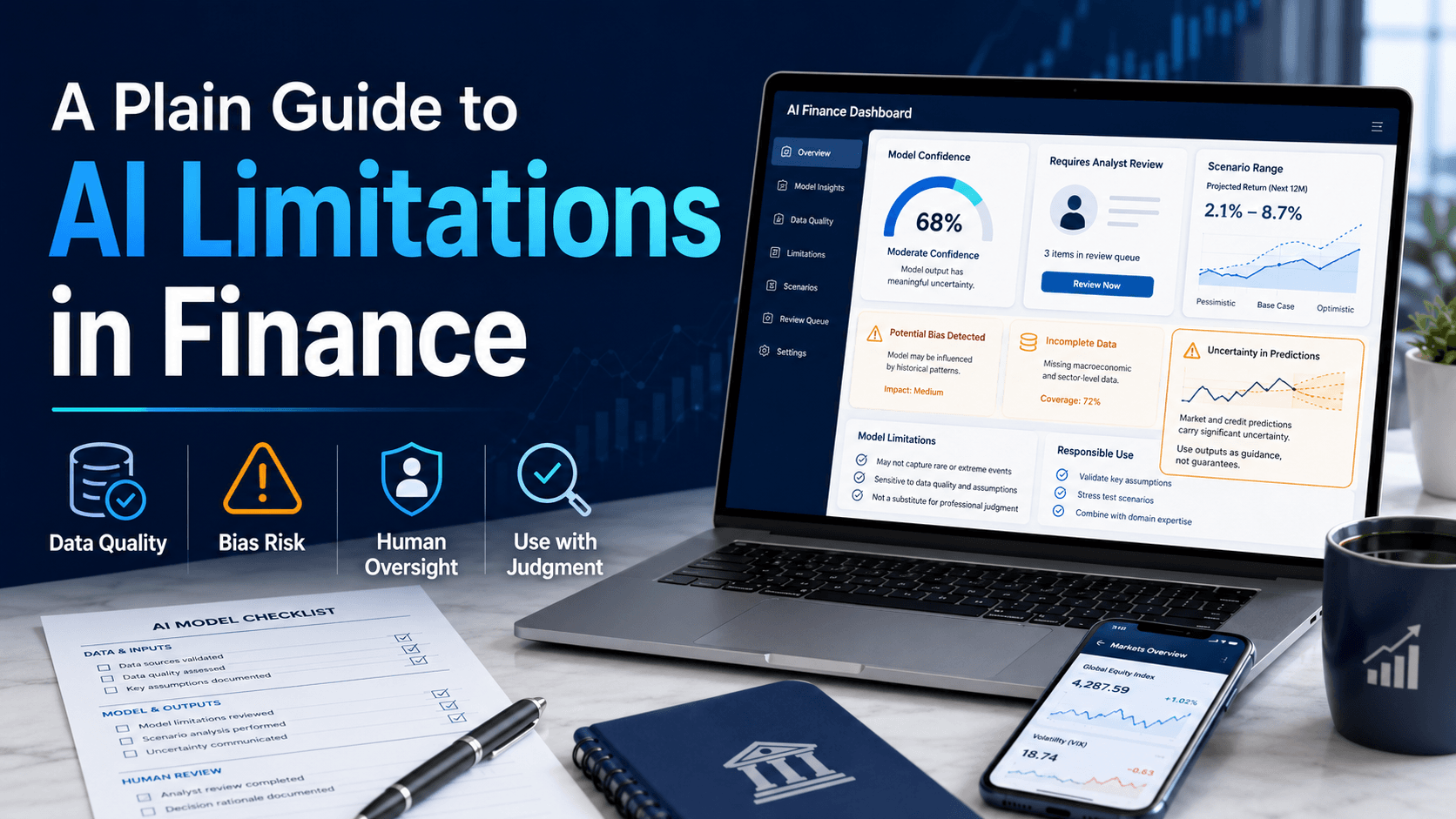
An honest AI accounting software guide refuses to oversell. The automation is genuinely useful, but it has clear limits, and this AI accounting software guide is blunt about them to protect you from costly over-reliance. The goal is to let software do the grunt work while you, or a professional, keep judgement in the loop.
Where the automation shines
AI excels at high-volume, repetitive tasks: categorising hundreds of transactions, matching receipts, flagging duplicates, and producing reports instantly. For these jobs it is faster and often more consistent than manual work. This is the core promise of AI accounting software, and for routine bookkeeping it largely delivers.
Where a human still wins
Software struggles with nuance: an unusual transaction it miscategorises, a tax strategy that needs judgement, or advice on structuring your business. It can also be confidently wrong, so unreviewed automation is risky. For anything with real tax or legal stakes, a qualified accountant remains worth far more than the subscription, as this AI accounting software guide keeps emphasising.
Pricing, security, and getting started
Two practical concerns round out this AI accounting software guide: what you will pay, and whether your financial data is safe. Both are manageable once you know what to look for, and neither should be a reason to avoid these tools entirely.
How pricing usually works
Most tools charge a monthly subscription tiered by features and users, with some offering a free or low-cost entry level. Prices change often, so this guide avoids specific figures; check current rates directly. Watch for jumps between tiers as you add features, and avoid paying for capabilities you will not use this year.
Keeping your financial data safe
You are trusting a provider with sensitive financial data, so security matters. Favour established platforms with strong encryption, two-factor authentication, and a clear privacy policy. Use a unique, strong password and enable extra verification. These habits, covered in our AI tax software comparison, apply to any financial tool you connect to your accounts.
A simple onboarding path
Start by connecting one bank account, importing a few months of history, and reviewing how well the tool categorises it. Correct its mistakes so it learns, then add other accounts gradually. A calm, staged rollout beats migrating everything overnight, and it is the approach this AI accounting software guide suggests for any switch.
Free trials and switching costs
Most providers offer a free trial, which is the smartest way to test fit before paying. Use it on real data, not a toy example. Bear in mind that switching tools later means migrating your history, so a little extra care choosing now saves friction down the line. Trialling properly is one of the cheapest, highest-value steps in this whole AI accounting software guide.
CALCULATOR HUB Business Calculators Break-even, markup, ROI, and more, to sanity-check the numbers your accounting tool reports.Common mistakes to avoid
Most regret around accounting tools comes from a few avoidable errors that this AI accounting software guide wants you to dodge. This AI accounting software guide ends the main discussion with them, because sidestepping these traps matters as much as picking the right platform in the first place.
Choosing on price alone
The cheapest tool is rarely good value if it lacks the integrations you need or wastes your time. Equally, the most expensive is not automatically better. Weigh cost against the hours saved and the features you will actually use, rather than reacting to the headline price tag.
Skipping the data cleanup
Importing messy, miscategorised history teaches the AI bad habits and produces unreliable reports. Spend time early correcting categories so the tool learns correctly. A little cleanup upfront pays off for years, and ignoring it is the quiet reason many people distrust their own numbers later.
Over-trusting the automation
AI categorisation is good, not perfect. Treating every automated entry as correct without review leads to errors that compound by tax time. Build in a quick monthly check of what the software did. The automation saves time precisely so you have a few minutes to review the parts that matter.
Use AI as a first draft, not the final word
The healthiest mindset is to let the software produce a first draft of your books that you then check, rather than accepting its output blindly. A few minutes of review each month catches the misfires before they harden into errors at tax time. Used this way, the automation saves hours without quietly introducing mistakes, which is the balance this AI accounting software guide recommends for everyone.
This AI accounting software guide is educational content, not financial, tax, or legal advice, and not an endorsement of any specific product. Features, pricing, integrations, and security details change frequently, so verify current information directly with each provider before deciding. For tax, compliance, or structuring decisions, consult a qualified accountant or professional who can review your full situation.
Frequently asked questions
What is AI accounting software in simple terms?
It is accounting software that uses machine learning to automate repetitive work, mainly categorising transactions, matching receipts, reconciling accounts, and generating reports. The bookkeeping job is the same as ever; AI just does more of the manual sorting for you, which this AI accounting software guide views as helpful automation rather than a replacement for judgement.
Is AI accounting software worth it for a small business?
For most, yes, because the time saved on data entry usually outweighs a modest subscription. The value depends on transaction volume and how much manual bookkeeping you do now. A freelancer with few transactions may need very little, while a busy small business often benefits substantially from the automation.
Can AI accounting software replace my accountant?
No. It replaces much of the data entry, not the judgement. An accountant advises on tax strategy, structure, and complex decisions the software cannot handle, and catches things automation misses. This AI accounting software guide sees the two as complementary: software for the routine, a professional for the stakes.
Which AI accounting software should you choose?
There is no single winner, only the right fit for your size and needs. QuickBooks Online and Xero suit many small businesses and teams; FreshBooks fits service freelancers; Wave suits very small budgets. Match the tool to your situation using the framework in this guide rather than chasing a universal winner.
Is my financial data safe with these tools?
Established providers use strong encryption and security practices, but as this AI accounting software guide reminds you, you share responsibility. Use a unique, strong password, enable two-factor authentication, and review the provider’s privacy policy. Favour reputable, well-reviewed platforms over obscure ones, and treat your accounting login with the same care as your online banking.
How much does AI accounting software cost?
Most charge a monthly subscription that scales with features and users, and some offer a free or low-cost entry tier. Because prices change frequently, this guide avoids specific figures; confirm current rates with each provider. Focus on value, the hours saved versus the fee, rather than the cheapest sticker price.
Do I still need bookkeeping knowledge if the AI does it?
Some, yes. You do not need to be an expert, but understanding the basics lets you spot when the automation gets something wrong and read your own reports with confidence. The software handles the mechanics; a little knowledge keeps you in control rather than blindly trusting the output.
Who is this AI accounting software guide for?
It is written for small businesses, freelancers, and growing teams choosing or switching accounting tools. Large enterprises with dedicated finance staff have different needs. If you want the fundamentals and a sensible way to choose, without the marketing spin, this AI accounting software guide is aimed squarely at you.
Putting this AI accounting software guide to work
The honest takeaway from this AI accounting software guide is simple: AI accounting software removes most of the tedious bookkeeping, but you still own the numbers. Choose for fit, not features, connect your accounts cleanly, review the automation regularly, and bring in a professional when the stakes are real.
Start small. Pick one tool that matches your size, connect a single account, and see how well it categorises a few months of history before committing fully. That low-risk trial tells you more than any feature list, and it is exactly how this AI accounting software guide suggests turning theory into a working setup.
For wider context as you build out the finance side of your business, authoritative resources like the SBA and Investopedia are solid references, while the IRS small-business pages cover recordkeeping expectations in the US.
AI accounting software is worth it for most small businesses because it automates the bookkeeping that eats your time, but it is a tool, not a substitute for understanding your finances. Choose for fit, keep your data clean, review the automation, and lean on a qualified accountant for the decisions that carry real tax or legal weight.
Educational content only, not financial, tax, or legal advice. Ladabo publishes research-based overviews to help you understand AI accounting software and make your own informed decisions; we do not provide individual advice, and we do not test every product first-hand. Features and pricing change, so verify current details with providers. Read our review methodology and disclaimer for how this content is produced and its limits.
Last reviewed: June 2026