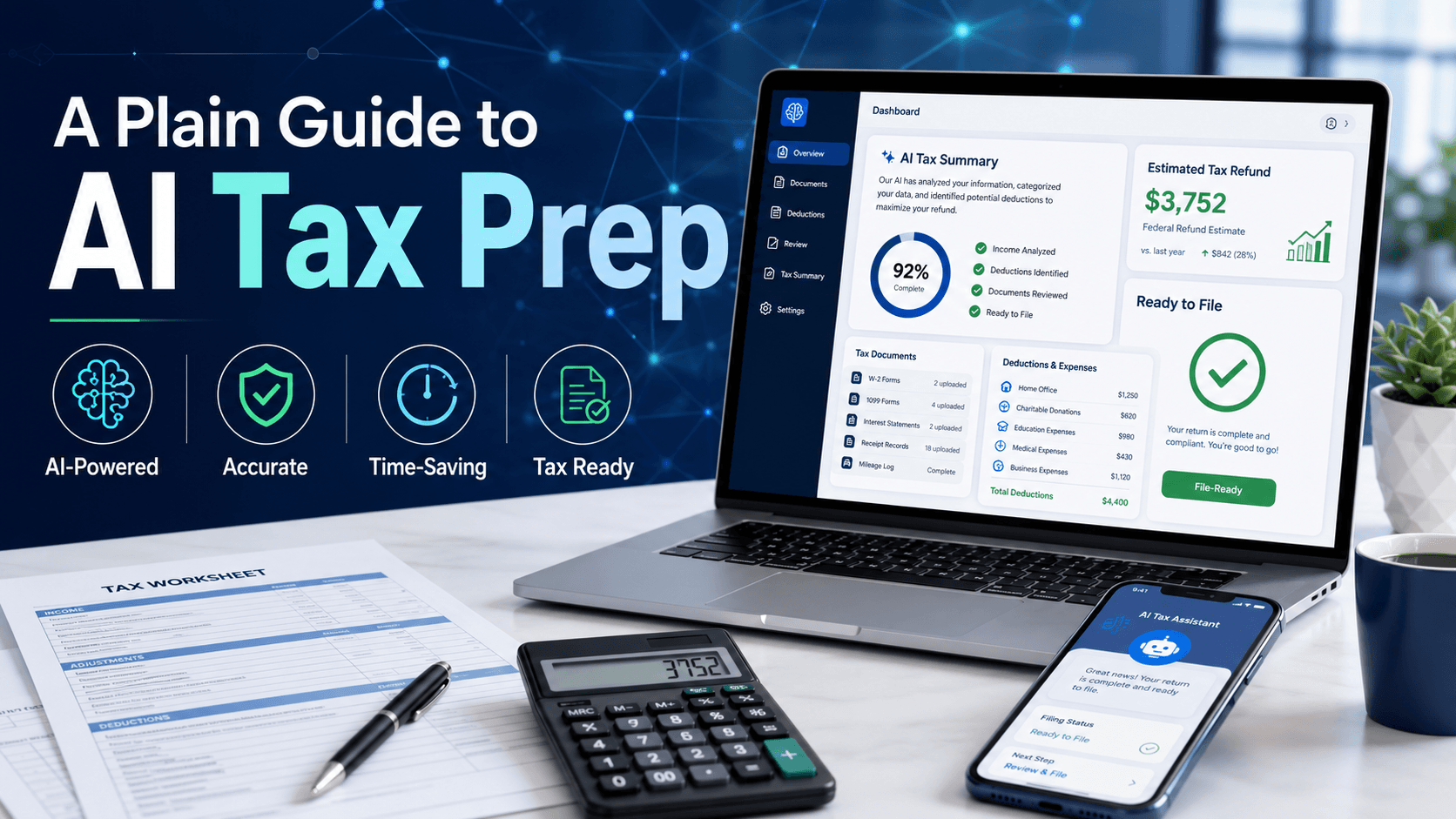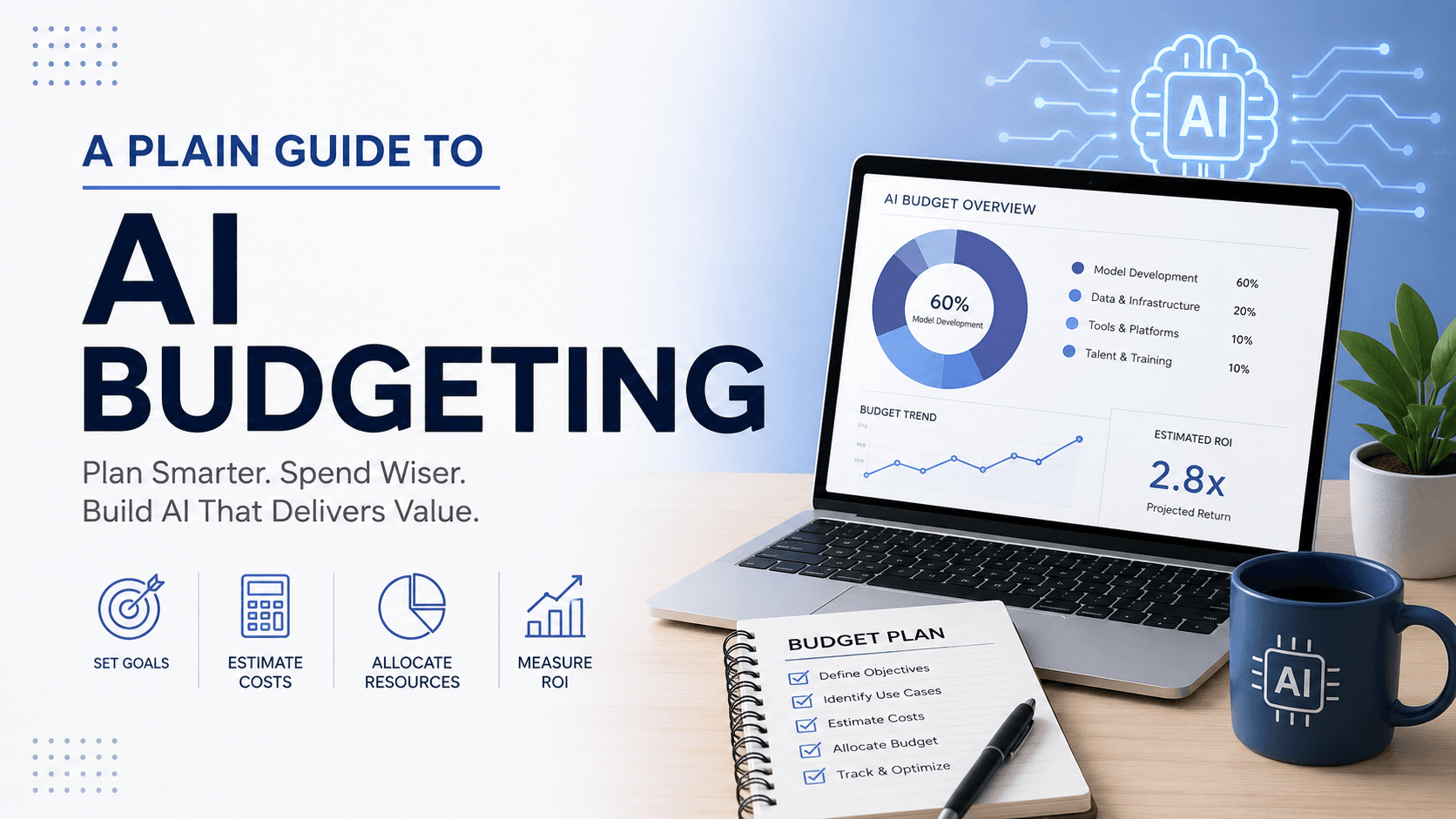
A Plain Guide to AI Tax Prep
A new wave of tools promises to make preparing your taxes easier using artificial intelligence. This plain-English guide explains AI tax prep, what it can do, and where to be careful.
Few financial chores are as universally dreaded as preparing taxes. So it is no surprise that a growing number of tools now promise to ease the burden using artificial intelligence, offering to organise documents, answer questions, and guide people through the process. The appeal is obvious, but taxes are an area where mistakes carry real consequences, which makes understanding what AI tax prep can and cannot do especially important. This guide takes a clear, balanced look at AI tax prep: where it genuinely helps, where its limits lie, and why it is no substitute for professional judgement when things get complicated.
This guide explains AI tax prep in plain, general terms. It covers what it is, how it works, what it can do well, its real limitations, the privacy questions it raises, and how to use it sensibly. The aim is grounded understanding, not tax advice, and emphatically not a substitute for a qualified professional; tax rules vary enormously by country and change quickly, and the stakes of getting them wrong can be high.
- What AI tax prep is
- How these tools work
- What they can do well
- Their real limitations
- The privacy questions they raise
- How to use them sensibly
What AI tax prep is
AI tax prep refers to using tools powered by artificial intelligence to help prepare and file taxes, from organising documents and answering questions to guiding people through filling out forms. Rather than working through everything alone or paying for full professional service, the idea is that software shoulders much of the routine effort.
In practice, AI tax prep is an evolution of the tax software many people already use, with more automation and conversational help layered on top. Where older software asked you to follow rigid steps, AI tax prep aims to feel more like assistance, interpreting your situation, prompting for what it needs, and explaining things along the way.
An assistant, not an authority
The most important framing for AI tax prep is that it is an assistant, not an authority. It can organise, prompt, and explain, but it works from your inputs and general patterns, and it can be wrong. Treating AI tax prep as a helpful tool to be checked, rather than an infallible expert, is the right starting point.
A spectrum of tools
AI tax prep covers a range of tools, from simple helpers that answer general questions to fuller systems that attempt to guide an entire filing. The more a tool does, the more important it is to understand its limits, because the consequences of an error grow as the tool takes on more of the actual tax work.
How AI tax prep works
Understanding roughly how AI tax prep works helps you use it well and judge when to be cautious. While tools differ, the broad approach is consistent.
Gathering and organising information
Most AI tax prep tools start by gathering information about your finances, sometimes by importing documents or asking questions, then organising it for the filing. This reduces some of the tedious sorting that makes taxes painful, though the accuracy of everything that follows depends on this information being correct and complete.
GUIDE AI in Personal Finance AI tax prep is one part of the wider role AI now plays in personal finance.Guiding you through the process
A central feature of AI tax prep is guidance: prompting you for what is needed, explaining steps, and answering questions in plain language. This conversational help can make a daunting process feel more approachable, though the guidance is generated from patterns and may not fit every situation perfectly.
Helping fill and check forms
Many AI tax prep tools help complete the actual forms and may run checks for obvious errors or missed entries. This can catch simple mistakes, but it is not the same as verifying that your return is correct for your specific circumstances, which still requires care and, often, human judgement.
This guide is general educational content, not tax, financial, or legal advice, and nothing here is a recommendation of any specific tool. AI tax prep tools can be wrong: they can misunderstand your situation, miss things, and give guidance that does not fit your circumstances, and you usually remain responsible for what you file. Tax rules vary enormously by country and change quickly, and errors can carry real penalties. For anything beyond the simplest situation, or whenever you are unsure, consult a qualified tax professional and your country’s official tax authority, and rely on current local rules rather than the general principles described here.
What AI tax prep can do well
Used realistically, AI tax prep genuinely can help with several things. Recognising its strengths lets you benefit without over-trusting it.
Reducing tedious effort
The clearest benefit of AI tax prep is cutting the drudgery of organising documents and working through forms. By automating some of the sorting and data entry, it can make a dreaded chore feel more manageable, which for many people is the difference between filing on time and putting it off.
Making taxes less intimidating
For people who find taxes confusing, AI tax prep can lower the intimidation by explaining steps in plain language and guiding them through. This hand-holding can give nervous filers the confidence to engage with their taxes rather than avoid them, which has real value even before any calculation.
GUIDE Understanding Estimated Taxes Understanding the basics helps you judge what an AI tax tool is doing.Catching simple errors
Many AI tax prep tools can flag obvious mistakes or gaps, such as a missing entry or an inconsistency, before you file. Catching these simple errors can prevent avoidable problems, acting as a useful check, though it is no guarantee that a return is fully correct for your situation.
Saving time and money for simple situations
For straightforward tax situations, AI tax prep can save both time and the cost of fuller professional service. Someone with very simple affairs may find a good tool perfectly adequate, handling the routine work efficiently. The key qualifier is “simple,” since the value falls away quickly as complexity rises, which we turn to next.
Answering general questions
One genuinely handy thing these tools can do is field general questions in plain language, the kind people are often too embarrassed or unsure to ask aloud. Explaining what a particular form is for, what a term means, or what a step involves can demystify a process that many find opaque and stressful, lowering the barrier to even starting.
It is worth keeping a clear line, though, between a general explanation and advice about your specific circumstances. A tool can usefully describe how something generally works, but the moment a question turns on the particular details of your situation, a general answer can mislead. Treating these explanations as helpful background rather than tailored guidance keeps them useful without letting them stray into territory where a professional is really needed.
The real limitations of AI tax prep
For all its conveniences, AI tax prep has serious limitations, and ignoring them is exactly how taxpayers get into trouble. Understanding them keeps your expectations and your filing safer.
It can be wrong
Like all AI, AI tax prep tools can be wrong, misunderstanding your situation, misapplying a rule, or missing something important. Because the output looks confident and official, errors are easy to accept. Yet since you usually remain responsible for your return, an uncaught mistake becomes your problem, not the tool’s.
It struggles with complexity
AI tax prep tends to work most reliably for simple situations and to struggle as complexity grows. Unusual income, significant life changes, business matters, or anything out of the ordinary can exceed what a general tool handles well. The more complicated your taxes, the less you should rely on AI tax prep alone.
Tax rules vary and change
Tax rules differ sharply by country and change frequently, and an AI tax prep tool may not perfectly reflect the rules that apply to you right now. Relying on a tool that is out of date or built for a different jurisdiction can produce confidently wrong results, which is why local, current rules ultimately matter most.
You remain responsible
Perhaps the most important limitation is that, in most cases, you, not the tool, are responsible for what you file. If AI tax prep makes a mistake and you submit it, the consequences, and any penalties, generally fall on you. This is a crucial reason to review carefully and seek professional help when unsure, rather than trusting the tool blindly.
This responsibility is easy to overlook precisely because a polished tool feels authoritative, as if it must have got things right. But authority of appearance is not the same as correctness, and a confident interface can lull people into skipping the checks they would otherwise make. Keeping firmly in mind that the final accountability is yours is what keeps AI tax prep a help rather than a trap.
Privacy and your data
Because AI tax prep involves some of the most sensitive financial information you have, privacy deserves serious thought, not a casual click-through. Tax data is a rich target, and how it is handled matters.
Highly sensitive information
Tax information is among the most sensitive data about a person, covering income, finances, and personal details. Using AI tax prep means entrusting this to a tool, which is a significant decision. Understanding what you are sharing, and being deliberate about it, is part of using such tools responsibly.
GUIDE Financial Data Privacy A closer look at protecting your financial data when using AI-powered tools.Check how data is handled
Before trusting an AI tax prep tool, it is worth understanding how it stores, uses, and protects your information, and whether it shares data with others. Reputable tools are transparent about this. Taking time to check is part of making an informed choice rather than simply hoping your sensitive data is safe.
Weigh convenience against exposure
As with other AI financial tools, AI tax prep involves a trade-off between convenience and the exposure of sharing sensitive data. Only you can decide where your comfort lies, but making that choice consciously, and favouring tools that are clear and careful about data, is the sensible approach to such personal information.
Keep your own copies
A simple, practical habit is to keep your own secure copies of the documents and the final filing, rather than relying solely on a tool to hold them. Records can be needed later, to answer a query, to prepare next year’s return, or simply to check what was submitted, and a tool you stop using may not keep them accessible to you indefinitely.
Holding your own organised copies, stored securely and privately, puts you in control of your own information and protects you if a service changes, closes, or becomes hard to reach. It is a small piece of housekeeping that costs little and can save real frustration, and it reflects the broader principle of not depending entirely on any single tool for something as important as your tax records.
Using AI tax prep sensibly
The sensible way to use AI tax prep is as a capable helper kept firmly in its place: useful for routine work, never trusted beyond its limits, and backed by human judgement when it counts. A few principles make that balance easier.
Match the tool to your situation
The guiding principle for AI tax prep is to match the tool to the complexity of your taxes. For genuinely simple situations, a good tool may be all you need; as complexity rises, the case for professional help grows. Being honest about where your situation sits is the key first judgement.
Always review before filing
Because AI tax prep can be wrong and you remain responsible, never file without reviewing what the tool has produced. Check that it reflects your real situation, that nothing is missing, and that the figures make sense. This review is your protection against the tool’s occasional confident errors.
Know when to get a professional
A vital habit is recognising when AI tax prep is not enough. Complex situations, significant changes, business matters, or simply feeling unsure are all signs to consult a qualified tax professional. There is no shame in this; for anything beyond the straightforward, expert help is often well worth its cost.
Use official sources too
Whatever tool you use, your country’s official tax authority remains the definitive source on your obligations, and many publish helpful guidance. Pairing AI tax prep with the authority’s own information, and a professional where needed, gives you both convenience and a reliable check against the actual rules that apply to you.
This layered approach, a tool for the routine work, official guidance for the rules, and a professional for complexity or doubt, is far safer than leaning on any single source. It also reflects a healthy mindset: AI tax prep is one helpful input among several, not the final word. Used that way, it can genuinely lighten the load of tax season while keeping the responsibility, and the accuracy, where they belong.
Frequently asked questions
What is AI tax prep in simple terms?
AI tax prep means using tools powered by artificial intelligence to help prepare and file taxes, from organising documents and answering questions to guiding you through forms. It is essentially an evolution of tax software with more automation and conversational help. It is most accurately thought of as an assistant to be checked, not an infallible authority, since it works from your inputs and can be wrong.
How does AI tax prep work?
Most tools gather and organise information about your finances, sometimes by importing documents or asking questions, then guide you through the process in plain language, prompting for what is needed and explaining steps. Many also help fill in forms and run checks for obvious errors. The accuracy of everything depends on the information being correct and on the tool fitting your situation.
Is AI tax prep accurate?
Not always. Like all AI, these tools can misunderstand your situation, misapply a rule, or miss something, and because the output looks official, errors are easy to accept. They tend to work most reliably for simple situations and struggle with complexity. Since you usually remain responsible for what you file, reviewing carefully before submitting is essential.
Can AI tax prep replace a tax professional?
For genuinely simple situations, a good tool may be adequate. But AI tax prep struggles with complexity, may not reflect current local rules, and cannot match the judgement of a qualified professional for unusual income, significant changes, business matters, or anything out of the ordinary. The more complicated your taxes, the more a professional is worth consulting rather than relying on a tool alone.
Who is responsible if AI tax prep makes a mistake?
In most cases, you are. If a tool makes an error and you file it, the consequences and any penalties generally fall on you, not the tool. This is why it is so important to review what AI tax prep produces, confirm it fits your real situation, and seek professional help when unsure, rather than assuming the tool must have got everything right.
Is it safe to share my tax information with these tools?
Tax data is among the most sensitive information about you, so this deserves real thought. Before trusting an AI tax prep tool, understand how it stores, uses, and protects your information and whether it shares data with others. Reputable tools are transparent about this. Weighing convenience against exposure consciously, and favouring careful, clear tools, is part of using them responsibly.
How do I know if my taxes are too complex for AI tax prep?
Signs include unusual or multiple income sources, significant life changes, business or self-employment matters, activity across jurisdictions, or simply feeling unsure about what applies to you. When your situation goes beyond the straightforward, that is the moment to consult a qualified tax professional rather than relying on a general tool, and your tax authority’s guidance can help too.
The bottom line on AI tax prep
AI tax prep uses artificial intelligence to ease the dreaded task of preparing and filing taxes, organising documents, guiding people through the process in plain language, helping fill in forms, and catching simple errors. For straightforward situations, it can genuinely reduce tedium, make taxes less intimidating, and save time and money. Thought of as a capable assistant for routine work, it has a real and useful place in many people’s tax season.
But it is an assistant, not an authority. It can be wrong, it struggles as complexity grows, it may not reflect the current rules that apply to you, and, crucially, you usually remain responsible for what you file. It also handles some of your most sensitive data, which deserves careful thought. The sensible approach is to match the tool to the simplicity of your situation, always review before filing, lean on your tax authority’s official guidance, and know when to bring in a qualified professional. Used that way, AI tax prep can lighten the load while keeping accuracy and responsibility where they belong: with you.
This sits alongside the wider context in our estimated taxes guide. For a neutral, broader reference on tax and finance concepts, Investopedia is a useful starting point, but for what you actually owe and must file, your country’s tax authority and a qualified professional are the sources that count.
AI tax prep uses AI to organise documents, guide you through filing, and catch simple errors, easing a dreaded task for simple situations. But it can be wrong, struggles with complexity, may not reflect current rules, and you usually remain responsible for what you file. Match it to your situation, always review before filing, and get a professional when unsure.
Educational content only, not tax advice. Ladabo publishes research-based guides to help you understand AI tax prep and make your own informed decisions; we do not provide individual tax, financial, or legal advice, and nothing here tells you what you owe. AI tools can be wrong, tax rules vary by country and change quickly, and you usually remain responsible for what you file. Read our review methodology and disclaimer for how this content is produced and its limits.
Last reviewed: June 2026