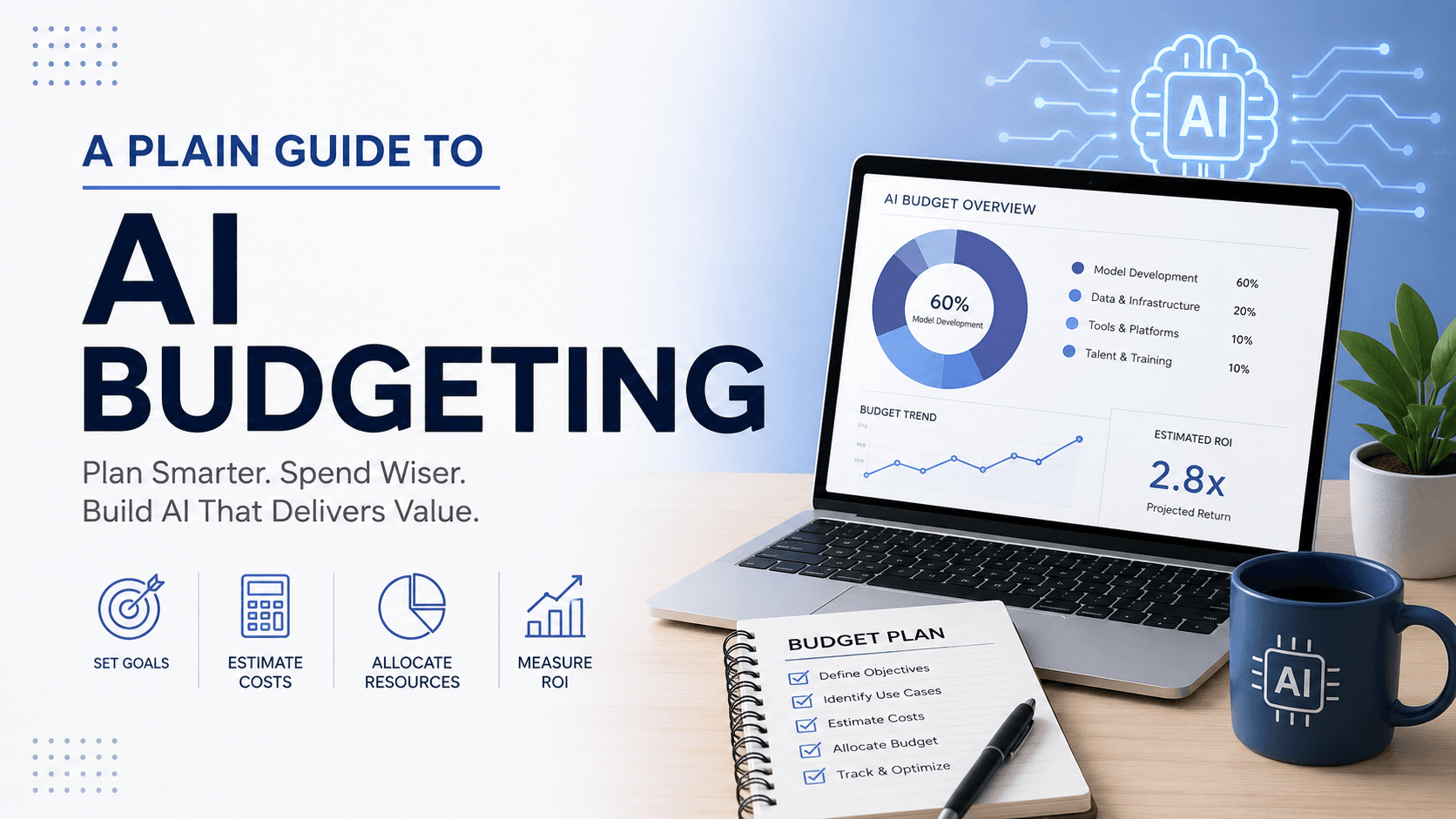
A Plain Guide to AI Budgeting
A growing number of tools promise to manage your money using artificial intelligence. This plain-English guide explains AI budgeting, what it can do, and where to be careful.
Budgeting has always been one of the most useful, and most neglected, money habits. It is also one of the first places the wave of new artificial intelligence tools has arrived, promising to take the effort out of tracking spending, spotting patterns, and planning ahead. The pitch is appealing: let software do the tedious parts and simply tell you what is going on with your money. But understanding what AI budgeting actually is, what it does well, and where it falls short matters before handing any tool your financial life. This guide offers a clear, balanced look.
This guide explains AI budgeting in plain, general terms. It covers what it is, how it works, what it can do well, its real limitations, the privacy questions it raises, and how to approach it sensibly. The aim is a grounded understanding, not a recommendation of any particular tool, and certainly not financial advice; the goal is to help you decide whether and how such tools might fit your own situation.
- What AI budgeting is
- How these tools generally work
- What they can do well
- Their real limitations
- The privacy questions they raise
- How to approach them sensibly
What AI budgeting is
AI budgeting refers to using tools powered by artificial intelligence to help manage personal finances, especially tracking spending, categorising transactions, and offering insights or suggestions. Rather than entering everything by hand, the idea is that software does much of the work of organising and interpreting your money for you.
At its simplest, AI budgeting is an evolution of the budgeting apps many people already use, with more automation layered on top. Where a traditional app might require you to sort transactions yourself, an AI budgeting tool aims to do that automatically and to surface observations you might otherwise miss. The promise is less effort and more insight.
More than a calculator
The distinguishing feature of AI budgeting is that it tries to interpret your finances, not just record them. It may group spending into categories, flag unusual activity, or project future patterns. This interpretive layer is what separates AI budgeting from a simple spreadsheet, and it is also where both its value and its risks come from.
A tool, not an oracle
It is worth setting expectations early: AI budgeting produces helpful suggestions and summaries, not infallible truth. The tool is working from your data and general patterns, and it can be wrong or miss context. Treating it as a useful assistant rather than an authority is the right frame from the very start.
How AI budgeting works
Understanding roughly how AI budgeting works helps you use it well and judge its output sensibly. While tools differ, the broad approach is consistent.
Gathering your financial data
Most AI budgeting tools begin by gathering data about your finances, often by connecting to accounts or importing transactions. This data is the raw material the tool works from, which is why both its usefulness and its privacy implications depend heavily on how much it can see.
GUIDE How to Build a Budget Understanding budgeting fundamentals helps you judge what an AI tool is doing.Categorising and finding patterns
Once it has your data, an AI budgeting tool typically sorts transactions into categories and looks for patterns, such as recurring bills or rising spending in an area. This automatic categorisation and pattern-spotting is the core of what the tool offers, though it is not always accurate and benefits from your review.
Offering insights and suggestions
On top of categorising, AI budgeting tools often present insights, summaries, or suggestions, perhaps highlighting where money goes or proposing ways to save. These can be genuinely useful prompts, but they are generated from patterns and assumptions, so they should be weighed with your own judgement rather than simply followed.
Learning from your patterns over time
Many of these tools are designed to become more tailored the longer you use them, adjusting their categories and observations as they see more of your activity. In principle this means the picture they paint can grow more accurate over weeks and months, as one-off oddities fade and genuine habits become clear.
It is worth treating that promise with mild caution, though. More data can sharpen a tool’s view, but it does not give the tool the context only you hold, and an early miscategorisation that goes uncorrected can quietly persist. The improvement over time is real but partial, and it works most reliably when you are reviewing and gently correcting the tool as it learns rather than leaving it entirely to its own devices.
This guide is general educational content, not financial advice, and nothing here is a recommendation of any specific tool. AI budgeting tools can be wrong: they miscategorise transactions, miss context about your life, and base suggestions on general patterns that may not fit your circumstances. They are not a substitute for your own judgement or for a qualified professional. They also involve sharing sensitive financial data, with real privacy implications. Always review what a tool tells you, never follow suggestions blindly, and consult a qualified financial professional for decisions that matter.
What AI budgeting can do well
Used realistically, AI budgeting genuinely can help with several things. Recognising its strengths helps you get value from it without over-relying on it.
Reducing tedious effort
Perhaps the clearest benefit of AI budgeting is cutting the manual effort of tracking money. Automatic importing and categorising of transactions can save the tedium that causes many people to abandon budgeting altogether, making it more likely they will stick with it. Lowering friction is a real and valuable contribution.
Surfacing patterns you might miss
Because it processes a lot of data quickly, AI budgeting can surface patterns that are easy to overlook, such as creeping subscriptions or spending that drifts upward over time. Having these brought to your attention can be a useful nudge, prompting reflection you might not have reached on your own.
GUIDE What Is Lifestyle Inflation? Spending that drifts upward is exactly the kind of pattern these tools can highlight.Making finances feel less daunting
For people who find money overwhelming, AI budgeting can make finances feel more approachable by organising the chaos into something legible. A clear summary of where money goes, produced with little effort, can be the difference between engaging with your finances and avoiding them, which has real value in itself.
Encouraging consistency
Because they reduce effort and provide regular feedback, AI budgeting tools can help people stay consistent, and consistency is most of what makes budgeting work. A tool that quietly keeps your financial picture up to date, and reminds you of it, supports the steady attention that good money management actually requires.
This consistency benefit is easy to underrate. Plenty of people know exactly how to budget in principle yet never keep it up, because the manual upkeep is dull and easy to drop. By smoothing that friction away, AI budgeting can turn an intention that would otherwise fade into a habit that survives, and that survival is often worth more than any single clever insight the tool produces.
The real limitations
For all its strengths, AI budgeting has real limitations that matter. Understanding them protects you from over-relying on a tool that, however polished, is far from perfect.
It can be wrong
An AI budgeting tool can miscategorise transactions, misread patterns, or draw mistaken conclusions. Because its output looks confident and tidy, errors can be easy to accept without question. Reviewing what the tool produces, rather than trusting it blindly, is essential, since acting on a wrong summary can lead you astray.
It lacks your full context
A tool sees your transactions, but not your life. It does not know that a large expense was a one-off, that your income is about to change, or what your real priorities are. This missing context means AI budgeting can misjudge situations that any human who knew your circumstances would understand instantly.
Its suggestions are generic
Suggestions from AI budgeting tools are generated from broad patterns and may not suit your particular situation. Advice that makes sense on average can be wrong for you specifically. This is why such suggestions are most sensibly treated as prompts to think, not instructions to follow, and never as a replacement for tailored professional advice.
Over-reliance is a risk in itself
A subtler limitation is what can happen when people lean on these tools too heavily. If a tool quietly handles everything, it is possible to stop engaging with your own finances, losing the understanding and judgement that budgeting is meant to build. The convenience that makes AI budgeting helpful can, taken too far, leave you less financially aware rather than more.
The healthiest use keeps you in the loop rather than handing the whole job over. A tool should support your understanding of your money, not replace it, so that if you ever stopped using it you would still grasp your own situation. Staying engaged, reviewing what the tool does, and continuing to make the real decisions yourself is what keeps the technology a help rather than a crutch.
Privacy and your data
Because AI budgeting depends on access to sensitive financial information, privacy is a serious consideration, not an afterthought. Anyone weighing such a tool should think carefully about their data.
You are sharing sensitive information
Using AI budgeting usually means giving a tool access to detailed financial data, which is among the most sensitive information about you. This is a meaningful decision, and understanding what you are sharing, and with whom, is an important part of using these tools responsibly rather than casually.
GUIDE Financial Data Privacy A closer look at protecting your financial data when using AI-powered tools.Read how your data is handled
Before trusting an AI budgeting tool, it is worth understanding how it stores, uses, and protects your data, and whether it shares information with others. Reputable tools are transparent about this. Taking the time to check is part of making an informed choice rather than simply hoping for a good outcome.
Weigh convenience against exposure
There is a genuine trade-off in AI budgeting between the convenience of automatic access and the exposure that comes from sharing sensitive data. Only you can decide where your comfort lies, but making that decision consciously, rather than clicking through without thought, is the responsible approach.
Share only what you need to
A practical principle that applies well here is to share no more than the tool genuinely needs to do its job. If a service can be useful with access to a single account rather than your entire financial life, the narrower option limits your exposure while still delivering much of the benefit. More access is not automatically better.
It is also worth periodically reviewing what you have connected and revoking anything you no longer use. Permissions granted once have a way of being forgotten, quietly leaving data flowing to a tool you have abandoned. A simple, occasional check of what can see your financial information is a small habit that keeps your exposure deliberate rather than accidental.
Approaching AI budgeting sensibly
The sensible way to use AI budgeting is as a helpful assistant kept firmly in its place: useful for what it does well, never trusted beyond its limits. A few principles make that balance easier to strike.
Stay in control
The guiding principle for AI budgeting is to remain in control of your own finances, using the tool to inform you rather than to decide for you. Review its categorisations, question its suggestions, and keep making the real decisions yourself. The tool serves you, not the other way around.
Verify before acting
Because AI budgeting can be wrong, treat its output as a starting point to check, not a conclusion to act on. If a tool flags something or suggests a change, confirm it against your own knowledge before doing anything. This simple habit guards against the occasional confident error.
Keep learning the fundamentals
Relying on AI budgeting is no excuse to stop understanding money yourself. The fundamentals of budgeting, knowing what comes in, what goes out, and what your priorities are, remain essential. A tool works most effectively in the hands of someone who understands what it is doing and could manage without it if needed.
Match the tool to your needs
Finally, it helps to remember that not everyone needs AI budgeting at all. For some, a simple spreadsheet or a basic app is perfectly sufficient, and the extra automation adds little. Choosing a tool should follow from a real need, not from the mere fact that something is marketed as clever or new.
It is worth being honest with yourself about what problem you are actually trying to solve. If manual tracking is what keeps you from budgeting, automation may genuinely help; if you simply enjoy the novelty, a quieter, simpler approach may serve you just as well with less data shared. The right choice is the one that fits your situation, not the one with the most features, and there is no shame in deciding that the simplest option is the one for you.
Frequently asked questions
What is AI budgeting in simple terms?
AI budgeting means using tools powered by artificial intelligence to help manage personal finances, especially tracking spending, categorising transactions automatically, and offering insights or suggestions. It is essentially an evolution of budgeting apps with more automation, aiming to do the tedious organising for you and surface observations you might miss. It is a helpful assistant, not an infallible authority.
How does AI budgeting work?
Most tools gather data about your finances, often by connecting to accounts or importing transactions, then automatically sort that data into categories and look for patterns like recurring bills or rising spending. On top of that they present insights, summaries, or suggestions. The categorising and pattern-spotting are the core, though they are not always accurate and benefit from your review.
Is AI budgeting accurate?
Not always. AI budgeting tools can miscategorise transactions, misread patterns, and draw mistaken conclusions, and because the output looks tidy and confident, errors are easy to accept without question. They also lack the full context of your life. Treat what a tool produces as a starting point to review rather than a conclusion to act on without checking.
Can AI budgeting replace a financial professional?
No. AI budgeting tools generate suggestions from broad patterns and cannot account for your full circumstances, goals, or the nuances a qualified professional would consider. They can help you organise and understand your spending, but for decisions that matter, they are not a substitute for tailored, professional advice. Use them to inform yourself, not to replace expert guidance.
Is it safe to share my financial data with these tools?
That depends on the tool and your own comfort. AI budgeting usually means sharing sensitive financial data, which carries real privacy implications. Before trusting a tool, understand how it stores, uses, and protects your data and whether it shares information with others. Reputable tools are transparent about this, and weighing convenience against exposure consciously is part of using them responsibly.
Do I need an AI budgeting tool?
Not necessarily. For many people a simple spreadsheet or basic app is perfectly sufficient, and the extra automation adds little. AI budgeting is most useful if manual tracking is the thing that stops you budgeting at all. Choosing a tool should follow from a genuine need rather than from novelty, and the simplest option that works for you is a perfectly good choice.
What is the biggest risk of AI budgeting?
Beyond errors and privacy, the subtler risk is over-reliance: if a tool quietly handles everything, you can stop engaging with your own finances and lose the understanding budgeting is meant to build. The healthiest use keeps you in the loop, reviewing the tool’s work and making the real decisions yourself, so the technology stays a help rather than becoming a crutch.
The bottom line on AI budgeting
AI budgeting uses artificial intelligence to take much of the manual effort out of managing money, automatically gathering financial data, categorising transactions, spotting patterns, and offering insights. At its most useful it reduces the tedium that makes people give up on budgeting, surfaces patterns they might miss, makes finances feel less daunting, and supports the consistency that good money management depends on. For the right person, that can be genuinely valuable.
But it is a tool, not an oracle. It can miscategorise and misjudge, it lacks the context of your actual life, its suggestions are generic, and leaning on it too heavily can quietly erode your own financial understanding. It also depends on sharing sensitive data, with real privacy implications worth weighing consciously. The sensible approach is to stay in control, verify before acting, keep learning the fundamentals, and match the tool to a genuine need, using AI budgeting to inform your decisions rather than to make them, and never as a substitute for a qualified professional when something important is at stake.
This sits alongside the wider context in our guide to building a budget. For a neutral, broader reference on personal finance concepts, Investopedia is a useful starting point, but for decisions that affect your own money, a qualified financial professional is the source that counts.
AI budgeting uses AI to automate tracking, categorising, and finding patterns in your money, cutting tedium and supporting consistency. But it can be wrong, lacks your full context, gives generic suggestions, and involves sharing sensitive data. Stay in control, verify before acting, keep learning the fundamentals, and never treat it as a substitute for a professional.
Educational content only, not financial advice. Ladabo publishes research-based guides to help you understand AI budgeting and make your own informed decisions; we do not provide individual financial advice, and nothing here is a recommendation of any specific tool. AI tools can be wrong and involve sharing sensitive data. Read our review methodology and disclaimer for how this content is produced and its limits.
Last reviewed: June 2026