AI in Personal Finance: The Ultimate Guide for 2026
AI in personal finance has moved far beyond hype. From budgeting apps that learn your spending patterns to robo-advisors managing trillions of dollars, artificial intelligence is quietly rewriting how millions of people earn, save, spend, and invest.
This guide cuts through the noise to show you what AI in personal finance actually does today, what it does not, and exactly how to use it well in 2026.
The four real categories of AI in personal finance, the six biggest use cases (with specific tools), where AI fails badly, the privacy trade-offs nobody talks about, a practical 5-step framework for using AI well, what’s coming next, and clear answers to the questions everyone asks.
What is AI in personal finance?
AI in personal finance refers to the use of artificial intelligence — machine learning, natural language processing, and predictive analytics — to help individuals manage their money. It powers everything from automatic transaction categorization in budgeting apps to portfolio management in robo-advisors.
The term gets used loosely, so let’s be precise. Modern AI in personal finance falls into four distinct categories, each with its own strengths and risks.
The four types of AI used in personal finance
| AI Type | What It Does | Examples |
|---|---|---|
| Pattern recognition | Learns your spending patterns and flags unusual transactions | Fraud detection, transaction categorization |
| Natural language interfaces | Lets you ask financial questions in plain English | Cleo, Magnifi, Bank of America’s Erica |
| Automated decision-making | Moves your money based on rules and predictions | Wealthfront, Betterment, Digit |
| Generative AI | Explains concepts, drafts documents, summarizes finances | Emerging tools using GPT-style models |
Most apps you’ll encounter combine two or three of these. Understanding which type each tool uses matters because each comes with different trade-offs around privacy, accuracy, and trust.
How AI in personal finance has evolved
To understand where AI in personal finance is going, it helps to know how we got here. The evolution happened in three waves.
Wave 1: Rule-based automation (2010-2015)
The first generation of “smart” finance tools wasn’t really AI at all. Apps like Mint pioneered automatic transaction categorization using simple keyword-matching rules. If a transaction said “STARBUCKS” it got tagged as “Coffee.” Effective but limited.
Wave 2: Machine learning at scale (2015-2022)
The second wave introduced genuine machine learning. Robo-advisors like Wealthfront and Betterment used algorithms to build and rebalance portfolios. Apps like Digit analyzed cash flow to predict safe-to-save amounts. Transaction categorization accuracy improved significantly as models learned from large datasets.
Wave 3: Generative AI and conversational finance (2023-present)
The third wave brings large language models into personal finance. Tools now let you have natural conversations about your money. According to FDIC consumer research, the share of adults under 35 using AI-powered finance tools has grown rapidly in recent years — driven primarily by mobile-first apps with conversational interfaces.
6 ways AI in personal finance actually works today
Let’s get specific. Here are the six biggest use cases for AI in personal finance, with real tools and honest assessments of how well each one works, based on extensive research of user reviews and expert publications.
1. AI-powered budgeting and spending tracking
This is the most mature category. Modern AI budgeting apps connect to your bank accounts and use machine learning to categorize transactions, identify patterns, and surface insights.
Based on user reports and expert reviews, these apps can typically:
- Automatically categorize most transactions correctly (accuracy improves over time as the AI learns your patterns)
- Notice spending pattern changes month over month
- Predict end-of-month account balances
- Identify forgotten subscriptions
- Suggest where to cut based on your stated goals
- Send personalized nudges before you overspend
Apps like Cleo go further with chatbot interfaces that have a distinctive personality. You can literally text “How am I doing?” and get a conversational spending review. For people who avoid financial reviews, the conversational layer can change behavior — though it’s polarising. Read our research-based Cleo review for the honest picture.
These apps need read access to your bank accounts. The convenience is real. So is the privacy cost. Always check whether the app sells anonymized transaction data — many “free” budgeting apps monetize this way.
2. Automated savings through AI
Automated savings is one of the cleanest applications of AI in personal finance. The pattern is simple: an algorithm watches your cash flow, predicts when you have “extra” money, and moves small amounts to savings without you noticing.
Apps like Digit (now part of Oportun) pioneered this approach. The algorithm:
- Learns your income patterns and timing
- Tracks recurring bills and predicted expenses
- Estimates daily safe-to-save amounts
- Transfers small amounts to savings unpredictably
- Stops when balances get low
For people who struggle to save manually, this approach has helped many users build savings they didn’t realize they could. Published company data and user reports suggest meaningful first-year savings totals for committed users.
The downside is loss of control. You’re trusting an algorithm to know what’s “safe” to remove from your checking. Most of the time it’s right. When it’s not, you risk overdraft.
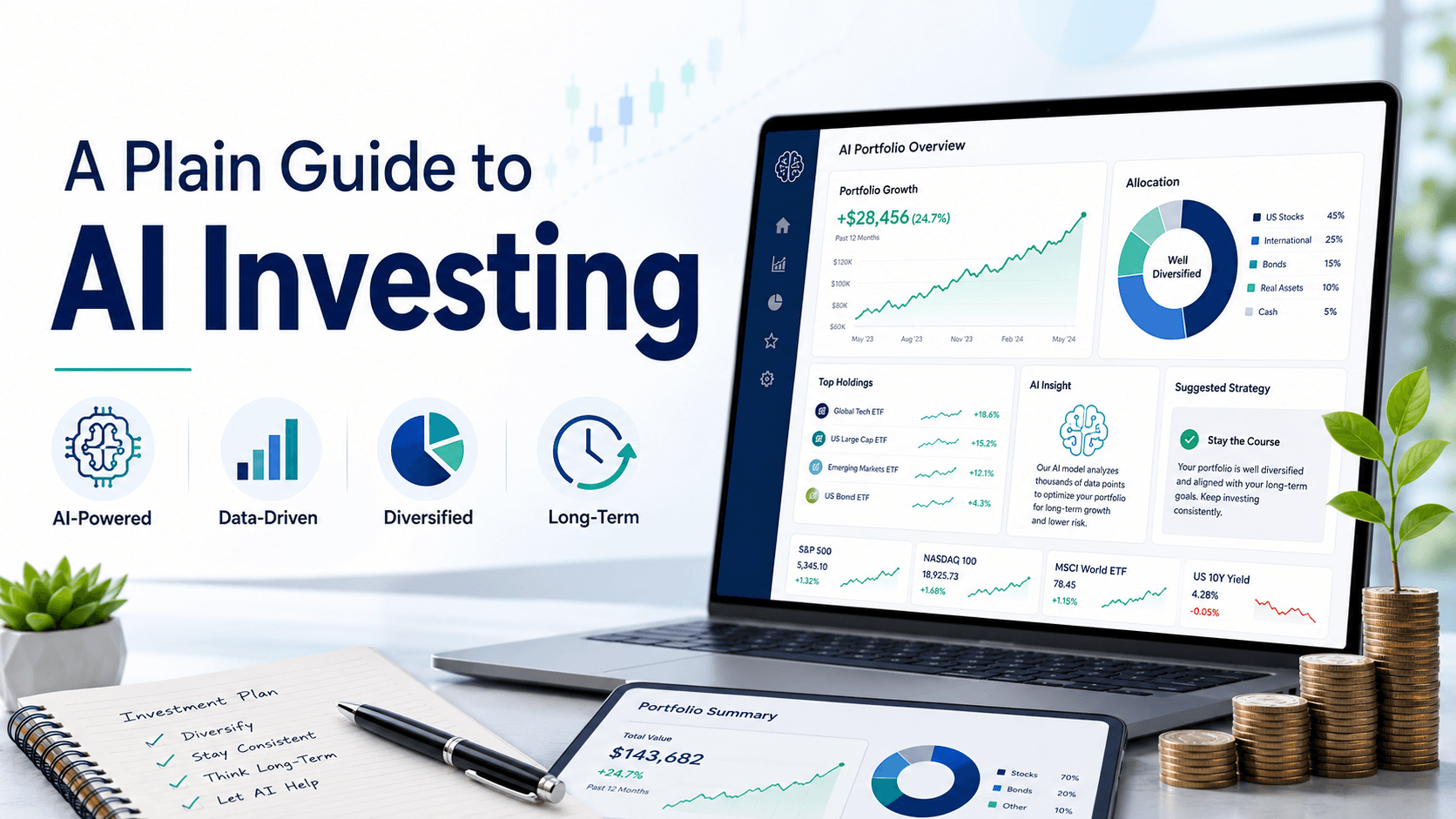
3. AI investing and robo-advisors
Investing has been reshaped by AI more than almost any other personal finance category. Robo-advisors now manage hundreds of billions of dollars globally, according to Statista fintech research.
The basic pitch is compelling. Instead of paying a human financial advisor 1% per year (€10,000 on a €1M portfolio), pay 0.25% to an algorithm that does the following:
- Asks you a handful of questions about goals and risk tolerance
- Builds a portfolio of low-cost ETFs
- Automatically rebalances when markets move
- Performs tax-loss harvesting (in supported countries)
- Reinvests dividends automatically
- Adjusts allocations as you approach goals
For most beginner investors with simple needs, this is often better than the alternatives — better than paying high fees to a mediocre human advisor, and better than picking stocks yourself without expertise.
However, robo-advisors struggle with complexity. Multiple income streams, business ownership, international tax issues, estate planning, charitable giving — these still benefit from human expertise.
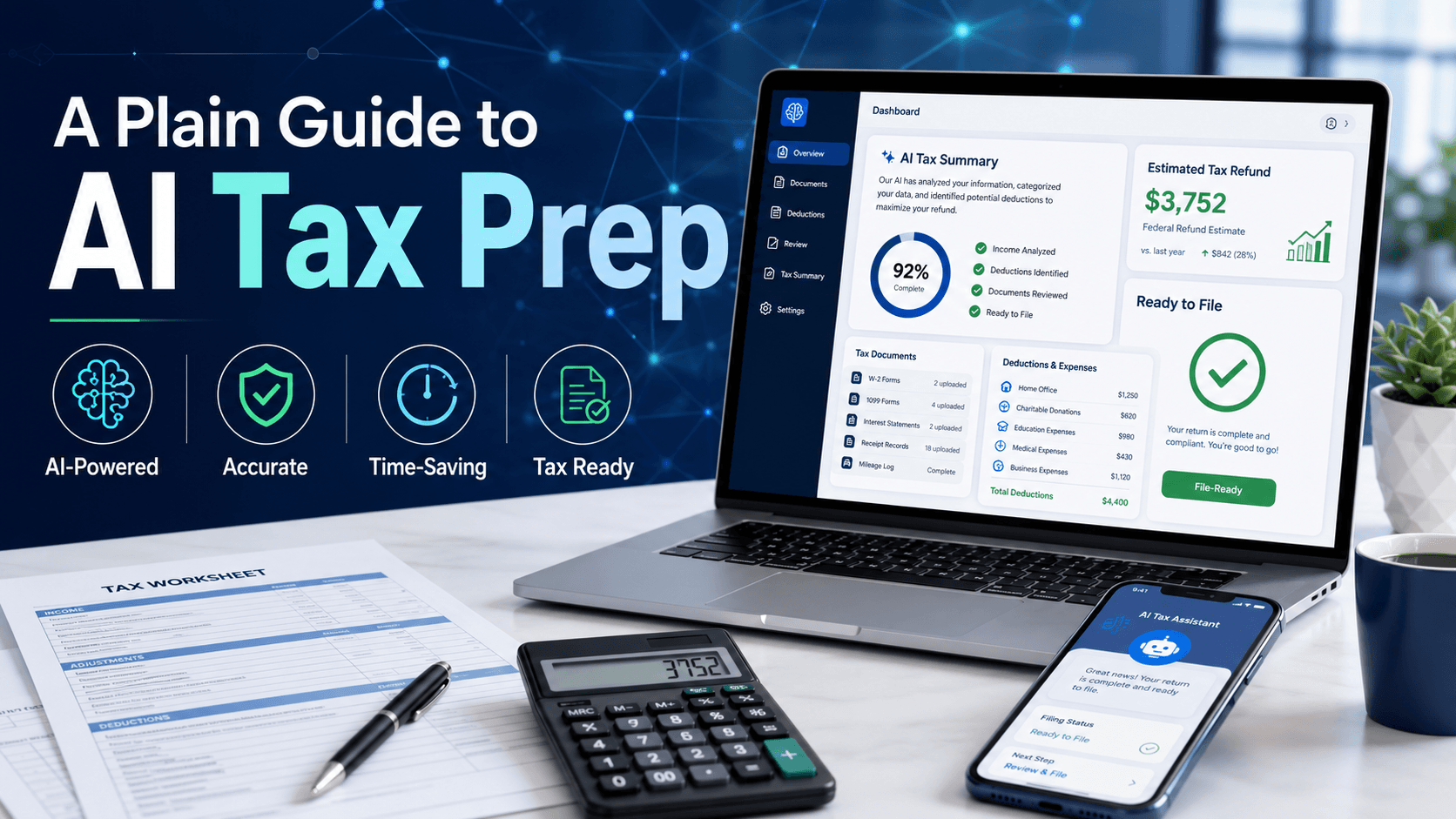
4. AI in tax filing and deduction discovery
Tax software has been “smart” for years, but the latest generation of AI in personal finance goes much further. Tools like Keeper and FlyFin connect to your bank accounts and use machine learning to:
- Identify potential business expenses you might have missed
- Suggest deductions based on your work patterns
- Estimate quarterly taxes for self-employed workers
- Generate audit-ready documentation
- Flag potential red flags before filing
- Match receipts to bank transactions automatically
For freelancers, gig workers, and small business owners, this can mean finding hundreds or thousands of dollars in legitimate deductions that would otherwise be missed.
AI tax tools work best in countries with well-defined deduction categories. For complex international situations, multi-state filings, or unusual deductions, you still want a human accountant in the loop.
5. AI for crypto and Web3 finance
Crypto tax calculation is arguably the area where AI in personal finance is most clearly indispensable. Tracking gains and losses across hundreds of trades, dozens of exchanges, multiple wallets, and DeFi protocols is essentially impossible by hand.
Tools like Koinly and CoinTracker use AI to:
- Pull transaction history from hundreds of exchanges and wallets
- Match transfers between your own accounts automatically
- Calculate cost basis using FIFO, LIFO, or specific identification
- Generate tax-ready reports for your jurisdiction
- Flag missing transactions and reconciliation errors
- Track NFT and DeFi yield farming activity
What used to require days of spreadsheet work can now be reduced to a fraction of that time. For active crypto users, this category alone often justifies AI in personal finance.
6. AI financial assistants and chatbots
The newest category blends conversational AI with financial data access. The idea is simple: instead of navigating menus and dashboards, ask questions in plain English.
“How much did I spend on travel last quarter?” “Can I afford a €2,000 vacation next month?” “What’s my net worth?” The answers come back conversationally, often with actionable suggestions.
However, this is the area most likely to be over-hyped right now. While the interfaces feel magical, the underlying intelligence is often basic. The AI knows your numbers — it does not necessarily know what’s wise for your specific situation.
AI is excellent at data analysis — what you spent, where, when. It’s mediocre at judgment — whether something is a good financial decision. Treat AI assistants like spreadsheets that talk — useful for organizing, not for deciding.
What AI in personal finance is NOT
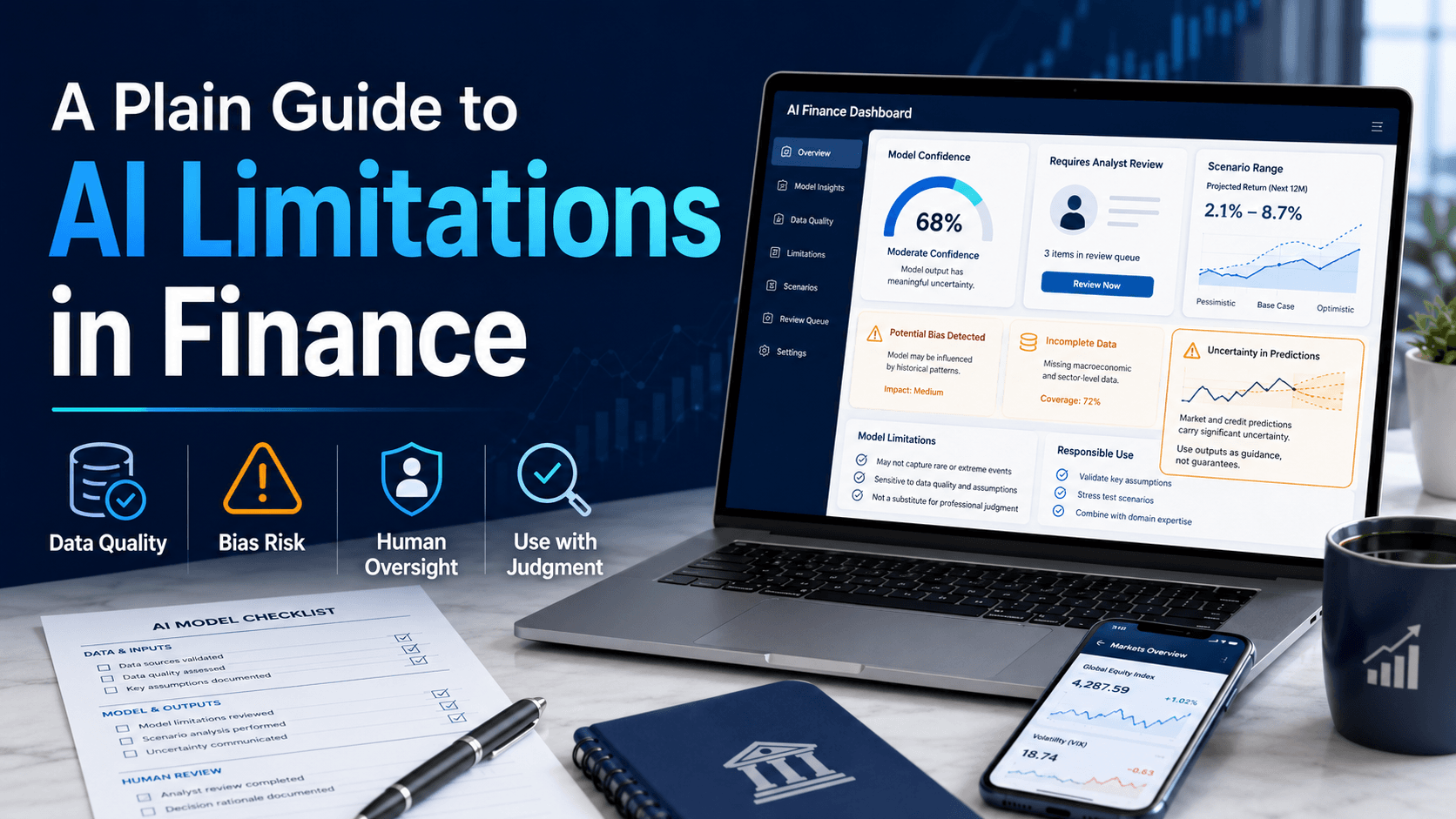
For all the genuine progress, there are real limitations to understand before relying on AI for important financial decisions.
AI does not predict markets
Despite marketing claims, no consumer AI tool reliably predicts market movements. If one did, the people who built it would be running hedge funds, not selling subscriptions to retail consumers. Be deeply skeptical of any tool that promises market prediction or “guaranteed returns.”
AI does not understand context
An AI might tell you to cut grocery spending because it’s higher than average — without knowing you have three kids, a medical condition requiring special foods, or you cook for elderly parents. Algorithms see numbers. They do not see context.
AI is not a fiduciary
Human financial advisors, the good ones, are legally required to act in your interest. AI tools have no such obligation. Many are designed to optimize for their company’s metrics, not yours. According to SEC investor alerts, automated systems may have conflicts of interest that aren’t always disclosed.
AI can amplify mistakes
Automating bad financial habits does not fix them. If you let an app auto-invest in tools you do not understand, you have outsourced the decision without learning anything. When markets crash, you may panic-sell because you never understood why you owned what you owned.
AI cannot replace human judgment for major decisions
Buying a home, starting a business, choosing between job offers, divorce settlements, inheritance planning — these decisions involve emotional context, life goals, and trade-offs that no algorithm can fully evaluate. AI can provide data. It cannot provide wisdom.
Never share API keys, bank passwords, or two-factor recovery codes with AI tools you don’t fully trust. This is the single biggest security risk in AI finance — even legitimate tools can be compromised. Always use official read-only connections like Plaid or your bank’s native integrations.
Privacy trade-offs nobody talks about
One of the most underdiscussed aspects of AI in personal finance is the privacy cost. To work, these tools need extensive access to your financial life, which is why financial data privacy deserves real attention.
What data AI finance apps typically collect
| Data Type | Why They Need It | Risk Level |
|---|---|---|
| Bank account transactions | Categorization and budgeting | High |
| Account balances | Cash flow analysis | Medium |
| Income source and patterns | Savings predictions | High |
| Spending location data | Pattern recognition | High |
| Investment portfolios | Net worth tracking | Medium |
| Device and usage data | Product analytics | Low |
The “free tool” business model problem
Many free AI finance tools monetize by selling anonymized transaction data to third parties. Even when the data is “anonymized,” researchers have repeatedly shown that credit card data alone can re-identify individuals with remarkable accuracy.
Before signing up for any AI finance tool, ask yourself:
- Who profits if I use this tool?
- Is my data sold or shared with third parties?
- Where is my data physically stored?
- Can I delete my data completely if I stop using the service?
- What happens if the company is acquired or goes bankrupt?
How to use AI in personal finance well: a 5-step framework
Here’s a practical framework based on extensive research of user reviews, expert publications, and the patterns we’ve seen across the AI finance tool market.
Start with one tool, not five
Most people make the mistake of trying every AI finance tool at once. This creates noise, fatigue, and inconsistent data. Instead, pick one budgeting app. Use it for 3 months. Learn what it teaches you about your spending. Then, and only then, add the next tool.
Read what data you’re sharing
Before connecting any AI finance tool to your bank account, read the privacy policy carefully. Look specifically for: do they sell anonymized data? Is your data stored in your country? Who has internal access? What’s the deletion policy? If the policy is vague, that’s a red flag.
Verify AI suggestions before acting
If an AI tool tells you to make a financial decision, treat it as a starting point — not a final answer. For anything material (more than a few hundred euros, anything irreversible), get a human perspective or do independent research. AI is a research assistant, not a decision-maker.
Use AI for analysis, humans for decisions
AI excels at compiling, categorizing, and surfacing patterns. Use it for that. For decisions about retirement strategy, major purchases, business structuring, or estate planning, talk to a qualified human professional. The €200 you spend on a real advisor for one major decision can save you tens of thousands.
Don’t over-automate
The point of personal finance isn’t to never think about money — it’s to think about it intentionally. If you automate everything, you also automate away the awareness that drives better decisions. Keep at least one weekly financial ritual where you actually look at your money.
Comparing AI in personal finance tools by category
If you’re trying to figure out where to start, here’s a comparison of leading tools across the main categories of AI in personal finance.
| Category | Best for | Top Tools | Pricing |
|---|---|---|---|
| AI Budgeting | Daily spending awareness | Cleo, Copilot Money, Monarch | Free – $15/mo |
| Auto-Savings | Building emergency funds | Digit, Qapital, Chime | Free – $5/mo |
| Robo-Investing | Long-term wealth building | Wealthfront, Betterment, Schwab IP | 0.25 – 0.40% AUM |
| AI Tax | Freelancers and gig workers | Keeper, FlyFin, TurboTax AI | $15 – $200/yr |
| Crypto Tax | Active crypto traders | Koinly, CoinTracker, ZenLedger | $50 – $300/yr |
| AI Spend Mgmt | Businesses and teams | Ramp, Brex, Divvy | Free – Custom |
The future of AI in personal finance
Where is AI in personal finance heading? Based on current trends and emerging research, here are five developments worth watching.
Hyper-personalized financial coaching
Next-generation AI in personal finance will combine your financial data with behavioral patterns to offer truly personalized advice. Imagine an AI that knows you tend to overspend on Fridays, suggests cooling-off periods before large purchases, and adjusts its tone based on whether you respond better to encouragement or tough love.
Predictive cash flow with high accuracy
Current tools predict end-of-month balances. Future tools will predict your cash flow 6-12 months out with high accuracy, factoring in seasonal patterns, career trajectory, and macro conditions. This will transform planning for major purchases and life events. Our guide to how AI financial planning works covers where these projections help today.
Voice-first financial management
The next interface revolution will be voice. “Hey, can I afford to fly home next month?” answered by an AI that knows your finances, calendar, and preferences. Early versions exist; mature ones are 2-3 years away.
Cross-platform financial intelligence
Today, your data is siloed across apps. Future AI in personal finance will pull data from banks, investments, real estate, retirement accounts, business ledgers, and even spending intentions in your calendar — creating a unified intelligent view of your entire financial life.
Regulation catching up
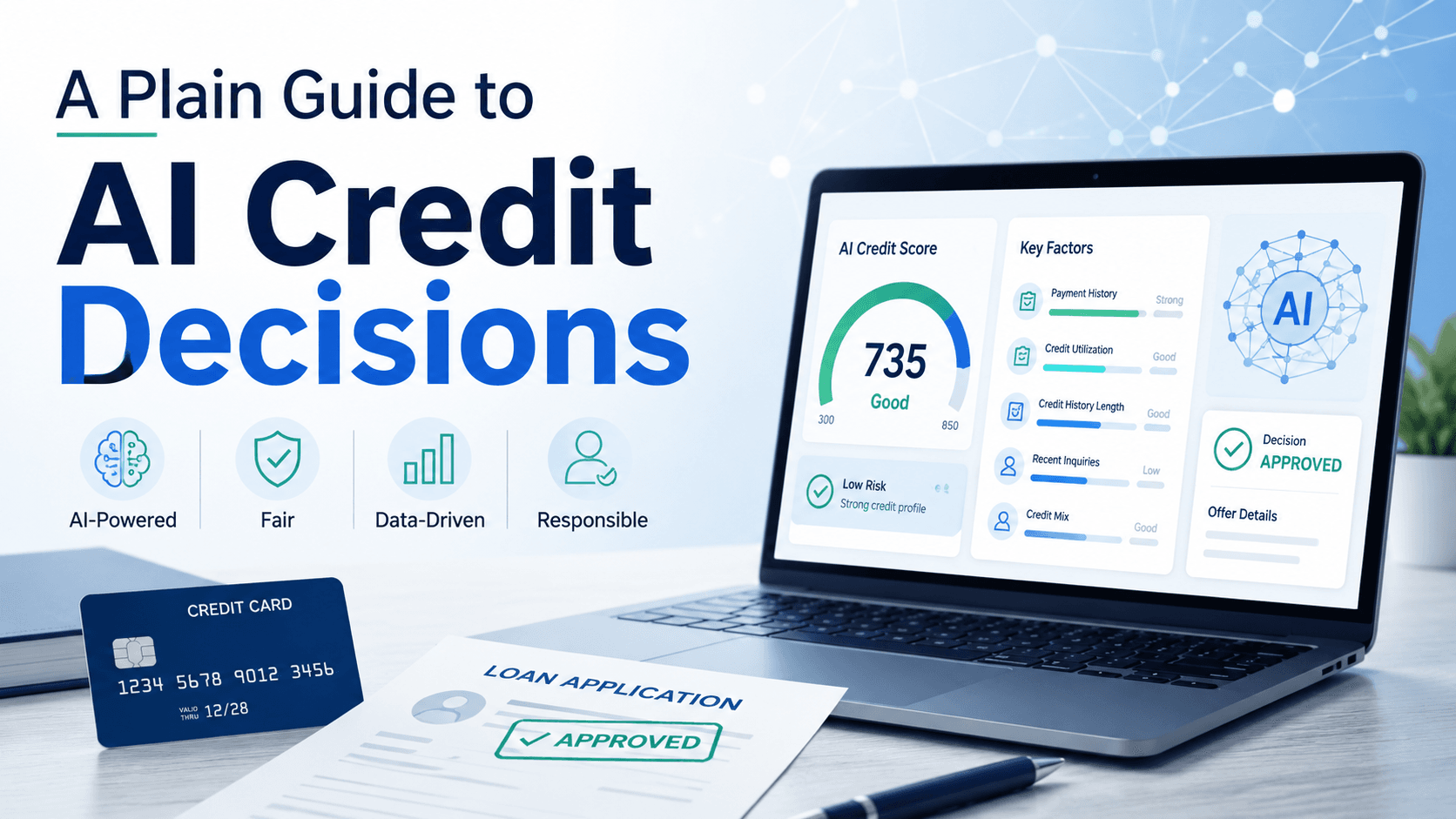
Expect significantly more regulation of AI in personal finance in the next 3-5 years. The EU AI Act and similar US initiatives will require transparency about how algorithms make recommendations, particularly around credit scoring and investment advice.
Frequently asked questions about AI in personal finance
Is AI in personal finance safe to use?
Generally yes, if you use reputable tools and understand the trade-offs. The bigger AI personal finance tools use bank-grade encryption and comply with regulations like PSD2 in Europe and similar laws in the US. The real risks are around data privacy and over-reliance on AI for major decisions, not security per se. For a closer look at this question, see our guide on whether AI financial tools are safe.
Can AI in personal finance replace a financial advisor?
For simple situations, often yes. For complex situations involving multiple income streams, business ownership, international tax considerations, estate planning, or major life transitions, no. AI in personal finance handles execution well; it handles judgment poorly. The best approach is using AI for day-to-day management and a human advisor for major decisions.
What’s the best AI tool for personal finance for beginners?
Based on user reviews and expert publications, beginners often start with Cleo because of its conversational interface. For people who want more analytical depth, Copilot Money is widely recommended for Apple users. For long-term investing, Wealthfront and Betterment lead the robo-advisor category. Start with one tool that matches your most immediate need.
Does AI in personal finance cost money?
Many AI finance tools offer free tiers funded by referral commissions or premium upgrades. Paid plans typically range from $5-$15 per month for budgeting apps. Robo-advisors charge 0.25-0.40% of assets under management. AI tax tools range from $15-$200 per year depending on complexity. Compare costs against time saved and decisions improved.
Can AI in personal finance help with debt?
Yes, in several specific ways. AI tools can identify which debts to prioritize using avalanche or snowball methods, model different repayment scenarios, find subscriptions to cancel, and automate extra payments when cash flow allows. Apps like Tally and Charlie focus specifically on debt reduction using AI-driven strategies.
Will AI in personal finance work outside the US?
Coverage varies significantly by country. The US, UK, Canada, and Australia have the most mature AI personal finance ecosystems. Germany, France, and other European countries have growing options. Many tools work globally for crypto and basic budgeting but lack local tax integration. Always check that a tool supports your country before signing up.
How accurate is AI in personal finance for budgeting?
Modern AI budgeting tools typically categorize most transactions correctly, with accuracy improving over time as the AI learns your specific patterns. The remaining transactions require manual review and correction. After 2-3 months of use, most categorization errors disappear for typical spenders.
What’s the biggest risk of using AI in personal finance?
The biggest risk is not technical — it’s behavioral. People who automate everything tend to stop paying attention to their finances. When something goes wrong (job loss, market crash, unexpected expense), they don’t recognize it quickly because they’ve outsourced their awareness. The solution: automate tasks, but keep a weekly ritual of actively reviewing your finances.
Putting it all together
AI in personal finance is real, useful, and here to stay. It’s not magic, it won’t replace financial advisors anytime soon, and it has genuine limitations you need to understand.
The best approach for most people in 2026:
- Use AI tools for the tedious work — categorization, tax tracking, savings automation
- Use human expertise for complex decisions — investments above $50K, business structuring, estate planning
- Use your own judgment for what makes sense in your specific life
The financial technology of 2026 is genuinely better than what existed even 5 years ago. Used thoughtfully, AI in personal finance can save hours of work, surface insights you’d miss, and democratize services that used to require wealth to access.
Used carelessly, it can amplify bad habits, share your data with too many parties, and lull you into believing software understands your life better than you do.
Find the balance. The tech is here. The wisdom of how to use it is still up to you. Start with one tool, read the privacy policy, verify suggestions before acting, and keep one human-led weekly money review on your calendar.
Continue exploring Ladabo
Pick what’s most useful for you next
Educational content only. This guide explains how AI in personal finance works — it is not personalized financial advice. For decisions about your specific situation, consult a qualified financial professional licensed in your country. Ladabo may earn commissions when you sign up for tools via affiliate links, but our reviews and analysis are research-based, not commission-driven. Our tool reviews are syntheses of public sources — not personal hands-on tests. Review methodology · Full disclosure.