

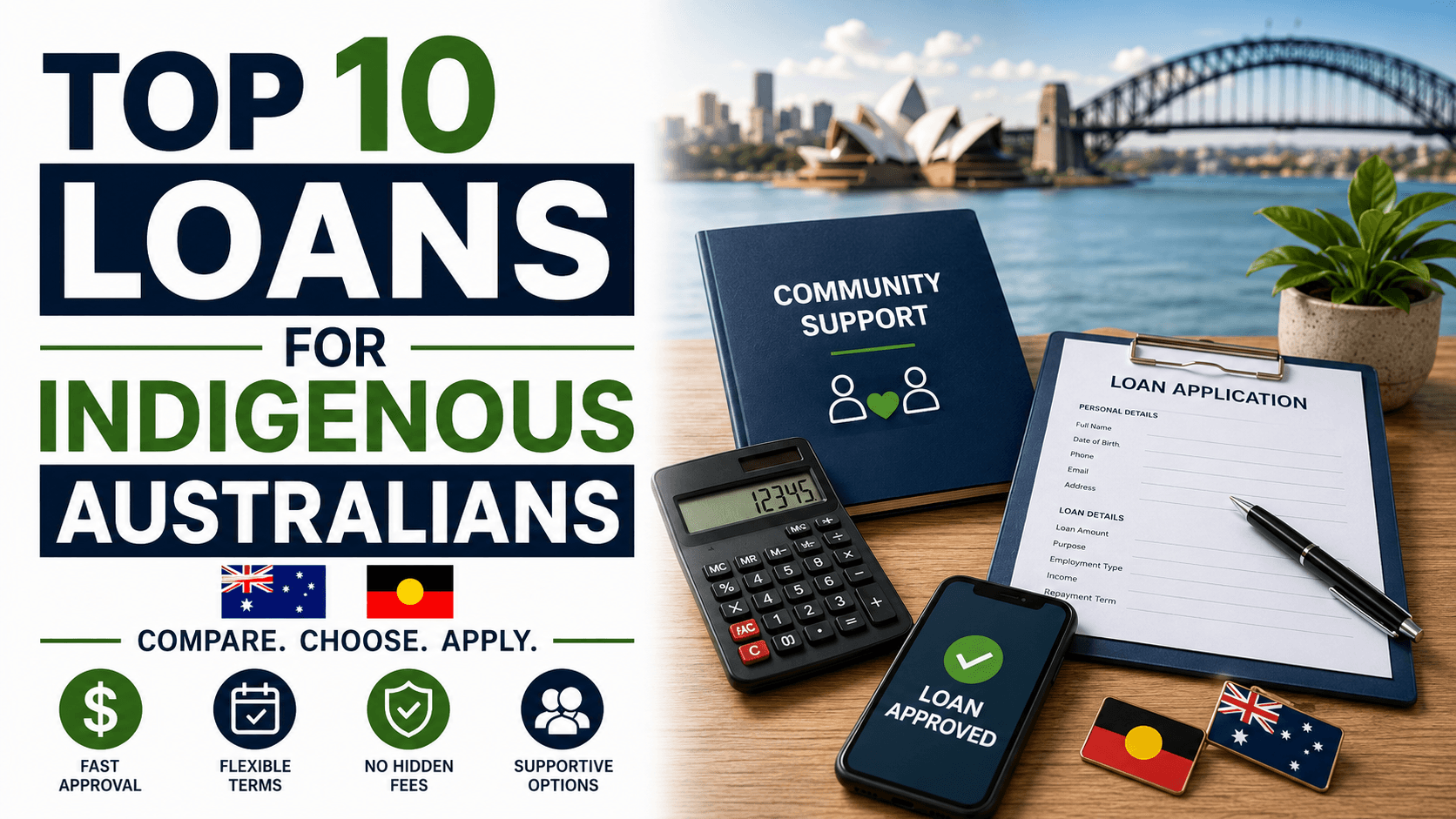
Access to fair, affordable, and culturally appropriate financial services is a fundamental right for all Australians — including the First Nations communities who have called this land home for tens of thousands of years. Aboriginal and Torres Strait Islander Australians face a unique set of financial circumstances: geographic remoteness in many communities, historical and structural barriers to financial inclusion, and a complex relationship with mainstream financial institutions. Loans for Indigenous Australians are the finance products, government programs, and community finance organisations specifically designed to provide fair, appropriate, and accessible financial services to First Nations people across urban, regional, and remote Australia.
The loans for Indigenous Australians landscape includes some of the most important and most underutilised government and community finance programs available anywhere in Australia — including the Indigenous Business Australia (IBA) home loan and business finance programs, NILS and StepUP through Good Shepherd Australia, and specific state and territory government programs for First Nations people. Understanding and accessing these purpose-built programs — before any commercial lending product — is essential for Indigenous Australians seeking fair and appropriate financial support.
Disclaimer: This article is general and educational in nature. It does not constitute financial advice. Indigenous Australians in financial difficulty should always contact the National Debt Helpline (1800 007 007) for free financial counselling. For specific IBA program inquiries, contact Indigenous Business Australia directly at iba.gov.au.
Table of Contents
- What Are Loans for Indigenous Australians?
- How Do Loans for Indigenous Australians Work?
- Top 10 Loans for Indigenous Australians
- Eligibility for Loans for Indigenous Australians
- Rates and Fees Explained
- Pros and Cons
- How to Compare Loans for Indigenous Australians
- Common Mistakes to Avoid
- Alternatives to Commercial Loans for Indigenous Australians
- Frequently Asked Questions
- Conclusion
What Are Loans for Indigenous Australians?
Loans for Indigenous Australians are finance products, government programs, and community finance initiatives specifically designed or assessed to meet the financial needs of Aboriginal and Torres Strait Islander people — recognising the unique historical, cultural, and geographic circumstances that have shaped the financial inclusion landscape for First Nations communities. These products range from government-backed concessional home loans and business finance through Indigenous Business Australia, to zero-interest NILS loans through Good Shepherd Australia, to competitive commercial personal loans from mainstream lenders for eligible Indigenous Australians in urban and regional centres.
The financial inclusion context for loans for Indigenous Australians is shaped by several important factors: geographic remoteness — which limits access to banking and financial services in many communities; historical exclusion from the financial system — which has created structural disadvantages in asset accumulation; cultural considerations around money management and community obligations that mainstream financial products do not always accommodate; and the disproportionate targeting of First Nations communities by high-rate fringe lending products that extract value from communities with limited alternatives.
The most important principle for loans for Indigenous Australians is that purpose-built government and community finance programs — particularly through Indigenous Business Australia and the Good Shepherd NILS and StepUP programs — exist precisely because mainstream financial products have historically failed to serve First Nations communities appropriately. Always explore these purpose-built programs before any commercial alternative. When commercial products are appropriate, always verify the lender through ASIC and be aware of the predatory fringe lending operations that specifically target remote and low-income Indigenous communities.
How Do Loans for Indigenous Australians Work?
- Contact Indigenous Business Australia first for home and business finance: IBA is the Commonwealth Government organisation specifically mandated to provide financial products and services to Aboriginal and Torres Strait Islander people — including concessional home loans and business finance. For any home purchase or business finance need, IBA is always the first contact for eligible Indigenous Australians before any commercial alternative.
- Check NILS eligibility for essential goods needs: Good Shepherd Australia’s NILS program provides zero-interest essential goods loans to eligible low-income Australians including many Indigenous Australians. For essential household items, medical equipment, or essential goods needs, NILS is always the most appropriate first commercial-adjacent option for eligible Indigenous Australians.
- Contact the National Debt Helpline for free culturally appropriate guidance: The National Debt Helpline (1800 007 007) provides free financial counselling — including counsellors with specific experience supporting Indigenous Australians and understanding of First Nations financial circumstances. This free service should always be accessed before any commercial lending product.
- Identify community-based financial services in your area: Many Aboriginal Community Controlled Organisations (ACCOs) and community organisations provide financial services, money management support, and referrals to appropriate loans for Indigenous Australians programs specific to the local area. Contact your local ACCO or community organisation to identify locally appropriate services.
- For commercial products, always verify lender ACL status through ASIC: Predatory fringe lending operations specifically target Indigenous communities — particularly remote communities with limited alternative access. Always verify any commercial loans for Indigenous Australians lender through the ASIC Connect register before providing any personal information or documentation.
Top 10 Loans for Indigenous Australians
1. Indigenous Business Australia (IBA) Home Loans
Indigenous Business Australia (IBA) is a Commonwealth Government body specifically mandated to assist Aboriginal and Torres Strait Islander people to achieve financial independence — including through concessional home loan products unavailable through commercial channels. IBA home loans offer competitive interest rates, flexible assessment criteria that recognise the unique housing circumstances of First Nations people, and culturally appropriate service delivery. For any Indigenous Australian considering homeownership, IBA is always the first and most important contact — providing purpose-built loans for Indigenous Australians home loan products that commercial lenders do not match.
Best for: Aboriginal and Torres Strait Islander Australians seeking home purchase financing — IBA home loans provide purpose-built, concessional loans for Indigenous Australians homeownership support with flexible assessment and culturally appropriate service delivery not available through mainstream commercial lenders.
Watch out for: IBA home loans have specific eligibility criteria and are subject to program capacity — apply early and contact IBA directly at iba.gov.au or on 1800 107 107. IBA also operates waiting lists for some programs — early engagement provides the best outcome for eligible applicants seeking loans for Indigenous Australians home purchase support.
2. IBA Business Finance
Indigenous Business Australia provides business finance products specifically for Aboriginal and Torres Strait Islander entrepreneurs and business owners — including concessional business loans, equity investment support, and business development assistance. IBA business finance recognises the unique challenges and opportunities of Indigenous business development, including community-owned enterprise models and the cultural business context of First Nations commerce. For any Indigenous Australian considering business finance, IBA business support is always the first reference point for purpose-built loans for Indigenous Australians business products.
Best for: Aboriginal and Torres Strait Islander business owners and aspiring entrepreneurs — IBA business finance provides purpose-built, culturally appropriate loans for Indigenous Australians business support that commercial lenders do not replicate, with business development assistance alongside finance.
Watch out for: IBA business finance requires a viable business plan and demonstrated capacity to repay. Contact IBA directly at iba.gov.au for current program availability, eligibility criteria, and application support for loans for Indigenous Australians business finance. IBA also provides pre-finance business development support for eligible applicants preparing their first business finance application.
3. No Interest Loan Scheme — NILS (Essential Goods)
NILS through Good Shepherd Australia provides eligible low-income Australians — including many Aboriginal and Torres Strait Islander people — with loans of up to $2,000 for essential goods and services at zero interest and zero fees. NILS has a strong presence in Indigenous communities across Australia and is specifically designed to be accessible and culturally appropriate. For eligible Indigenous Australians who need essential household items, whitegoods, medical equipment, or essential goods, NILS is the most cost-effective of all loans for Indigenous Australians commercial-adjacent products — zero borrowing cost, culturally sensitive delivery.
Best for: Eligible Indigenous Australians on low incomes who need essential goods — NILS provides zero-cost loans for Indigenous Australians access that is always preferable to any commercial product for eligible essential goods purchases by qualifying First Nations Australians.
Watch out for: NILS provides goods and services — not cash. Processing takes 1 to 2 weeks. Visit nils.com.au or call 13 64 57 to find the nearest provider. Many Indigenous communities have community-based NILS providers — contact the local community organisation to identify the nearest NILS provider for loans for Indigenous Australians essential goods needs.
4. StepUP Loan (Good Shepherd Australia — Low Rate)
The StepUP Loan through Good Shepherd Australia provides eligible low-to-moderate income Australians — including many Aboriginal and Torres Strait Islander people — with loans of $800 to $3,000 at a low fixed interest rate with no fees. For eligible Indigenous Australians who need more than NILS can provide, StepUP offers a purpose-built low-cost loans for Indigenous Australians commercial product at rates far below SACC alternatives — and is specifically delivered through culturally appropriate channels in many communities.
Best for: Eligible Indigenous Australians who need $800 to $3,000 for a genuine essential purpose and cannot be served by NILS — StepUP provides affordable loans for Indigenous Australians at a low rate with no fees through culturally appropriate community delivery channels.
Watch out for: Always check NILS eligibility first — zero-cost access through NILS is always preferable to the interest-bearing StepUP for eligible essential goods needs. Contact Good Shepherd Australia directly for current StepUP program availability and eligibility for loans for Indigenous Australians through this program.
5. Centrelink Advance Payment (Zero Cost)
For Indigenous Australians receiving Centrelink income support payments — including JobSeeker, Parenting Payment, Youth Allowance, and Disability Support Pension — the Centrelink advance payment provides up to two weeks of the current payment amount at zero cost through MyGov at any time. This is always the first and most cost-effective loans for Indigenous Australians option for eligible Centrelink recipients who need a small amount for an unexpected expense — free, instant, and available without credit assessment.
Best for: Indigenous Australians receiving Centrelink payments — the advance is always the first action before any commercial loans for Indigenous Australians product for eligible recipients, available at zero cost through MyGov or through Centrelink offices in rural and remote communities.
Watch out for: The advance reduces future Centrelink payments over 13 fortnights. Always confirm reduced future payments will still cover essential living costs before applying. For Indigenous Australians in remote communities where internet access for MyGov may be limited, Centrelink offices and community service organisations can assist with advance applications for loans for Indigenous Australians.
6. State and Territory Indigenous-Specific Housing Programs
Each state and territory government operates specific housing programs for Aboriginal and Torres Strait Islander people — including community housing, rental assistance, and in some cases subsidised homeownership loan programs specifically for Indigenous Australians. These state government programs complement IBA home loans and provide additional pathways to housing security for First Nations Australians. Always contact your state’s Aboriginal housing authority alongside IBA when considering any loans for Indigenous Australians housing-related finance.
Best for: Indigenous Australians seeking housing security — state government Indigenous housing programs provide pathways to community housing, rental assistance, and subsidised homeownership that complement IBA home loans as purpose-built loans for Indigenous Australians housing solutions.
Watch out for: State Indigenous housing programs vary significantly between states and territories. Contact your state’s Aboriginal housing authority or local community organisation for current program availability and eligibility for loans for Indigenous Australians housing support in your specific area.
7. Community Emergency Relief (ACCO and Mainstream)
Aboriginal Community Controlled Organisations (ACCOs) and mainstream community organisations — including the Salvation Army and local charities — provide emergency financial assistance for essential expenses for Indigenous Australians in genuine hardship. ACCO-delivered community relief is specifically culturally appropriate and community-controlled — providing assistance within the cultural and social framework of First Nations communities. For Indigenous Australians facing essential expense emergencies, culturally appropriate community relief is always the most appropriate first resource before any commercial loans for Indigenous Australians product.
Best for: Indigenous Australians in genuine financial hardship — ACCO and community emergency relief provides culturally appropriate, non-repayable assistance for essential needs that is always preferable to commercial loans for Indigenous Australians products for eligible essential expense emergencies.
Watch out for: Community relief availability varies significantly by location and community. Contact your local ACCO or the National Debt Helpline (1800 007 007) to identify appropriate culturally appropriate community emergency relief for loans for Indigenous Australians essential needs in your specific community.
8. Competitive Personal Loan (Urban and Regional Indigenous Australians)
For Aboriginal and Torres Strait Islander Australians living in urban and regional areas with stable employment income and a positive credit history, competitive online personal loans at 9% to 18% p.a. from mainstream lenders provide accessible, flexible loans for Indigenous Australians commercial funding for genuine needs not covered by government programs or community assistance. Urban and regional Indigenous Australians have access to the same mainstream commercial products as all other Australians — and should access the most competitive available rates.
Best for: Urban and regional Indigenous Australians with stable employment and positive credit history — competitive online personal loans provide the most cost-effective commercial loans for Indigenous Australians option for eligible borrowers who have exhausted all government and community program alternatives.
Watch out for: Always verify the lender holds an Australian Credit Licence through ASIC before any commercial loans for Indigenous Australians application. Fringe lending operations specifically target Indigenous communities — legitimate lenders never charge upfront fees before providing a loan and never use informal or community-network sales channels. Always compare using comparison rate and total cost across multiple lenders before committing to any commercial product.
9. Financial Counselling and Money Management Support (Free)
The National Debt Helpline (1800 007 007) and the Financial Wellbeing and Capability program administered through the Australian Government provide free, culturally appropriate financial counselling and money management support for Indigenous Australians — including specialist Indigenous financial counsellors in some locations. The Commonwealth’s Financial Wellbeing and Capability program specifically funds community-based financial counselling services in Indigenous communities across Australia, providing free, confidential, and culturally appropriate financial guidance that is always the first step before any commercial loans for Indigenous Australians product.
Best for: All Indigenous Australians considering any financial product — free financial counselling from culturally appropriate services should always precede any commercial loans for Indigenous Australians product decision, ensuring the most appropriate strategy is identified by an independent expert who understands First Nations financial circumstances.
Watch out for: Always seek free government and community financial counselling before any paid financial advice or commercial debt management services. The National Debt Helpline (1800 007 007) can refer to specialist Indigenous financial counsellors where available in your area — providing the most culturally appropriate guidance for loans for Indigenous Australians financial decisions.
10. Avoiding Fringe Lending — Critical Protection
The most important protective principle for loans for Indigenous Australians is awareness of and protection from predatory fringe lending operations that specifically target Aboriginal and Torres Strait Islander communities — particularly remote communities where mainstream finance alternatives are limited. These operations — operating through informal community networks, door-to-door sales, social media, and phone contacts — offer high-rate or fee-heavy products to vulnerable community members under social pressure. Always verify ACL status through ASIC, always take time to compare alternatives, and always contact the National Debt Helpline (1800 007 007) before any loan commitment in a high-pressure sales situation.
Best for: All Indigenous Australians — awareness of predatory fringe lending operations and the tools to identify and avoid them is one of the most financially protective capabilities for any First Nations person considering any loans for Indigenous Australians commercial product.
Watch out for: Warning signs of predatory loans for Indigenous Australians products include: sales through informal community networks or social media; upfront fees before loan disbursement; very high interest rates or fees; pressure to sign immediately without time to compare; and refusal to provide a written credit contract. Always report predatory lending to ASIC (1300 300 630) and AFCA (1800 931 678) — protecting the community from these operators is an important community responsibility.
Eligibility for Loans for Indigenous Australians
- IBA home loans: Aboriginal or Torres Strait Islander person; Australian citizen or permanent resident; meet IBA income and capacity criteria; primary residence purchase; contact IBA at iba.gov.au for current program eligibility
- IBA business finance: Aboriginal or Torres Strait Islander person; viable business plan; demonstrated repayment capacity; contact IBA for current program availability and assessment criteria
- NILS: Healthcare Card holder, Pensioner Concession Card holder, or income below threshold; for essential goods and services; no credit check; available at nils.com.au
- StepUP Loan: Healthcare Card holder or meeting specific income criteria; Good Shepherd Australia assessment; contact Good Shepherd for current availability
- Centrelink advance: Currently receiving eligible Centrelink payment; apply through MyGov or at Centrelink office
- Commercial personal loan: Age 18+, Australian resident, stable income, credit assessment — same eligibility as all Australians; always verify lender ACL through ASIC
Rates and Fees: Loans for Indigenous Australians Compared
| Product | Typical Rate | Key Notes |
|---|---|---|
| Community emergency relief (ACCO) | Free — non-repayable | Culturally appropriate; contact local ACCO |
| Centrelink advance | 0% — repaid from future payments | Immediate through MyGov or Centrelink office |
| NILS | 0% — no interest or fees | Essential goods only; find provider at nils.com.au |
| IBA home loan | Concessional (below commercial rates) | Purpose-built; contact IBA at iba.gov.au |
| StepUP Loan | ~5% p.a., no fees | $800–$3,000; Good Shepherd Australia |
| Credit union personal loan | 8% – 16% p.a. | Member rates; personalised assessment |
| Online personal loan (good credit) | 9% – 18% p.a. | Urban/regional Indigenous Australians with stable income |
Common Fees on Loans for Indigenous Australians (Commercial Products)
| Fee Type | Description | Typical Amount |
|---|---|---|
| Establishment fee | One-off upfront fee — $0 on NILS, StepUP, and many online lenders | $0 – $595 |
| Monthly service fee | Ongoing fee — $0 on NILS, StepUP, and many competitive lenders | $0 – $13/month |
| Late payment fee | Charged when a repayment is missed — always set up direct debit | $15 – $35 per occurrence |
For independent guidance on financial products for Indigenous Australians, contact Indigenous Business Australia (IBA) and visit Moneysmart.gov.au. For free financial counselling, call the National Debt Helpline at 1800 007 007.
Pros and Cons of Loans for Indigenous Australians
| Pros of Loans for Indigenous Australians | Cons to Consider |
|---|---|
| IBA provides purpose-built concessional home and business finance | Remote community access to financial services remains limited in many areas |
| NILS and StepUP provide zero or low-cost essential goods access | Predatory fringe lending specifically targets Indigenous communities |
| Centrelink advance provides immediate zero-cost access for eligible recipients | Community financial obligations can create additional financial pressure |
| Free culturally appropriate financial counselling available | Historical exclusion from financial system creates structural disadvantages |
| Community-controlled organisations provide culturally appropriate support | Some government programs have waiting lists and limited places |
| Mainstream products accessible for urban/regional Indigenous Australians | SACC and fringe products disproportionately extract value from communities |
How to Compare Loans for Indigenous Australians
- Contact IBA first for home and business finance: Indigenous Business Australia is specifically mandated to provide concessional financial products for First Nations people — always the first contact for any home purchase or business finance need before any commercial loans for Indigenous Australians alternative. Contact IBA at iba.gov.au or 1800 107 107.
- Check NILS and Centrelink advance before commercial products: For essential goods needs and small emergency amounts, NILS zero-interest loans and Centrelink advance payments are always the most appropriate first options before any commercial loans for Indigenous Australians product. Visit nils.com.au for NILS eligibility and apply through MyGov for Centrelink advances.
- Contact the National Debt Helpline for free culturally appropriate guidance: The National Debt Helpline (1800 007 007) can refer to specialist Indigenous financial counsellors and community financial services. Free guidance should always precede any commercial loans for Indigenous Australians product decision.
- Identify local ACCO and community financial services: Aboriginal Community Controlled Organisations and community service providers often have specific financial assistance programs, money management support, and referrals to appropriate loans for Indigenous Australians products for the specific community context. Contact the local ACCO or community organisation before seeking external commercial products.
- Always verify commercial lenders through ASIC: Before any commercial loans for Indigenous Australians application or engagement, verify the lender’s ACL status through the ASIC Connect register. Fringe lending operations targeting Indigenous communities do not hold ACLs — ACL verification is the single most important protective check for all commercial lending engagement.
- Compare commercial products using comparison rate and total cost: For commercial loans for Indigenous Australians products, always compare using the comparison rate — not the headline rate — and calculate total interest and fees over the full loan term. The cost difference between legitimate competitive lenders and fringe products can be enormous — always calculate, never assume.
- Never sign in a high-pressure sales situation — always take time: Legitimate loans for Indigenous Australians commercial lenders provide written contracts and allow adequate time for review before signing. Any lender who pressures a decision without time for review — particularly through community networks, social media, or home visits — should be treated with significant caution and always reported to ASIC if potentially operating without an ACL.
Common Mistakes to Avoid With Loans for Indigenous Australians
- Not contacting IBA before commercial home and business finance: Many eligible Indigenous Australians access commercial financial products for home purchase and business finance without first contacting Indigenous Business Australia — missing purpose-built concessional products specifically designed for First Nations people. Always contact IBA first for any home or business finance need.
- Not checking NILS eligibility before commercial essential goods purchases: Zero-interest NILS loans for essential goods are specifically designed for eligible Indigenous Australians and are far superior to any commercial loans for Indigenous Australians product for essential goods needs. Always check NILS eligibility at nils.com.au before any commercial product for essential goods.
- Engaging with fringe lending operations through community networks: Fringe lending operations specifically use community trust networks — approaching community members through friends, family, or community events — to sell high-rate or fee-laden products. Never engage with any financial product offered through informal community channels without first verifying the provider holds an Australian Credit Licence through ASIC.
- Not accessing free financial counselling before commercial products: Free culturally appropriate financial counselling — available through the National Debt Helpline (1800 007 007) and specialist Indigenous financial counsellors — is specifically designed to identify the most appropriate loans for Indigenous Australians options for each individual situation. Always access free counselling first.
- Signing loan documents under community or social pressure without review: Social pressure and community dynamics can create situations where loan documents are signed without adequate review — particularly in remote communities with limited financial service access. Always take time to review any loans for Indigenous Australians loan document, ask for written information, and contact the National Debt Helpline before signing any commercial financial contract.
- Not reporting predatory lenders to ASIC and AFCA: Predatory fringe lending operations harm communities — and reporting them to ASIC (1300 300 630) and AFCA (1800 931 678) protects the community from continued exploitation. Every reported predatory lender is an action that protects other community members from the same harm. Always report suspicious loans for Indigenous Australians operations to the relevant authorities.
Alternatives to Commercial Loans for Indigenous Australians
- Indigenous Business Australia (IBA): Always the first contact for home and business finance — purpose-built concessional products for First Nations people at iba.gov.au
- NILS: Zero-cost essential goods access for eligible Indigenous Australians — find provider at nils.com.au or call 13 64 57
- Centrelink advance: Zero-cost immediate support for eligible Centrelink recipients — through MyGov or Centrelink office
- Community emergency relief (ACCO): Culturally appropriate non-repayable assistance through Aboriginal Community Controlled Organisations
- Free financial counselling: National Debt Helpline (1800 007 007) — free, confidential, can refer to specialist Indigenous financial counsellors
- State Indigenous housing programs: State and territory government housing support specifically for Aboriginal and Torres Strait Islander people — contact your state’s Aboriginal housing authority
For independent guidance on financial products for Indigenous Australians, contact Indigenous Business Australia and visit Moneysmart.gov.au. For free financial counselling, call the National Debt Helpline at 1800 007 007. For complaints about commercial lenders or to report predatory lending, contact the Australian Financial Complaints Authority (AFCA) or ASIC on 1300 300 630.
Frequently Asked Questions: Loans for Indigenous Australians
What are loans for Indigenous Australians?
Loans for Indigenous Australians are finance products, government programs, and community finance initiatives specifically designed for Aboriginal and Torres Strait Islander people — including IBA concessional home and business loans, NILS zero-interest essential goods loans, StepUP low-rate loans, Centrelink advances, community emergency relief through ACCOs, and competitive commercial personal loans for eligible urban and regional Indigenous Australians.
What is Indigenous Business Australia and how does it help?
Indigenous Business Australia (IBA) is a Commonwealth Government body mandated to assist Aboriginal and Torres Strait Islander people to achieve economic independence — including through concessional home loan products and business finance specifically designed for First Nations people. IBA home loans and business finance are always the first contact for any eligible Indigenous Australian considering homeownership or business finance, providing purpose-built loans for Indigenous Australians products unavailable through commercial channels. Contact IBA at iba.gov.au or 1800 107 107.
Can Aboriginal and Torres Strait Islander people access mainstream loans in Australia?
Yes — Aboriginal and Torres Strait Islander Australians in urban and regional areas with stable employment and positive credit history have full access to mainstream loans for Indigenous Australians commercial products on the same terms as all other Australians. Income, employment stability, and credit history are the primary assessment factors — ethnicity is not a factor in legitimate commercial loan assessment. Always verify commercial lenders through ASIC and compare using the comparison rate before any commercial loan commitment.
How do I identify and avoid predatory lending targeting Indigenous communities?
Warning signs of predatory loans for Indigenous Australians operations include: sales through informal community networks or social media; upfront fees before loan disbursement; very high interest rates or fees; pressure to sign immediately without time to compare; refusal to provide a written credit contract; and no verifiable ACL number. Always verify ACL status through ASIC Connect before any commercial engagement, and report suspected predatory lenders to ASIC (1300 300 630) and AFCA (1800 931 678) immediately.
Where can Indigenous Australians get free financial counselling?
The National Debt Helpline (1800 007 007) provides free financial counselling for all Australians and can refer to specialist Indigenous financial counsellors where available. The Commonwealth’s Financial Wellbeing and Capability program funds community-based financial counselling services in Indigenous communities. Local Aboriginal Community Controlled Organisations often have money management support services. Contact the National Debt Helpline for referral to the most appropriate local service for loans for Indigenous Australians financial guidance.
Conclusion: Finding the Right Loans for Indigenous Australians
Loans for Indigenous Australians sit within a financial landscape that has both unique strengths — purpose-built government programs through IBA, zero-interest community finance through NILS and Good Shepherd, and culturally appropriate support through ACCOs — and unique vulnerabilities, particularly the disproportionate targeting of First Nations communities by predatory fringe lending operations that exploit limited access to mainstream alternatives.
The most important principles for loans for Indigenous Australians are: always contact IBA first for home and business finance; always check NILS before commercial essential goods products; always access free financial counselling before commercial products; always verify commercial lenders through ASIC; always take time before signing any financial contract; and always report predatory operations to protect the community. Fair, affordable, and culturally appropriate financial access is a right for every Australian — and the purpose-built programs available through IBA, Good Shepherd, and community organisations exist to deliver that right to First Nations people across all of Australia.
Ladabo.com is here to help you understand and compare loans for Indigenous Australians — in plain English, with respect and no sales spin. We acknowledge the Traditional Owners and Custodians of the lands on which we work, and pay our respects to Elders past, present, and emerging. Explore your options and access the financial support you need with confidence.
Suggested Internal Links
- Top 10 Loans for Young Adults in Australia
- Top 10 Loans for Single Mothers in Australia
- Top 10 Loans for Casual Workers in Australia
- Top 10 Loans for New Immigrants in Australia
- Top 10 Cash Loans for Centrelink Recipients in Australia
Explore our blog for expert tips, loan guides, and practical advice on managing money in Australia.





Leave a Reply
You must be logged in to post a comment.