

- What Is Lenders Mortgage Insurance?
- How Does Lenders Mortgage Insurance Work in Australia?
- How Much Does Lenders Mortgage Insurance Cost in Australia?
- Who Pays Lenders Mortgage Insurance in Australia?
- When Is Lenders Mortgage Insurance Required?
- Top 10 Ways to Avoid Lenders Mortgage Insurance in Australia
- Pros and Cons of Paying Lender's Mortgage Insurance
- Is Lenders Mortgage Insurance Tax Deductible in Australia?
- Common Mistakes Borrowers Make With Lenders Mortgage Insurance
- Alternatives to Paying Lenders Mortgage Insurance
- Frequently Asked Questions: Lenders Mortgage Insurance in Australia
- Conclusion: Understanding and Avoiding Lenders Mortgage Insurance
If you are buying a home in Australia with less than a 20% deposit, there is a very good chance you have already come across the term lenders mortgage insurance. For many Australians — especially first home buyers — lender’s mortgage insurance comes as an unwelcome and expensive surprise. It can add thousands of dollars to the cost of buying a home, and yet most people do not fully understand what it is, why they have to pay it, or how they might be able to avoid it entirely.
This guide explains everything you need to know about lenders mortgage insurance in plain, straightforward Australian English. We cover what lenders’ mortgage insurance is, how it works, how much it costs, who pays it, and — most importantly — the most effective ways to avoid lenders’ mortgage insurance so you can keep more money in your pocket when buying your first or next home.
Disclaimer: This article is general and educational in nature. It does not constitute financial advice. Always speak with a licensed mortgage broker or financial adviser before making any borrowing decisions.
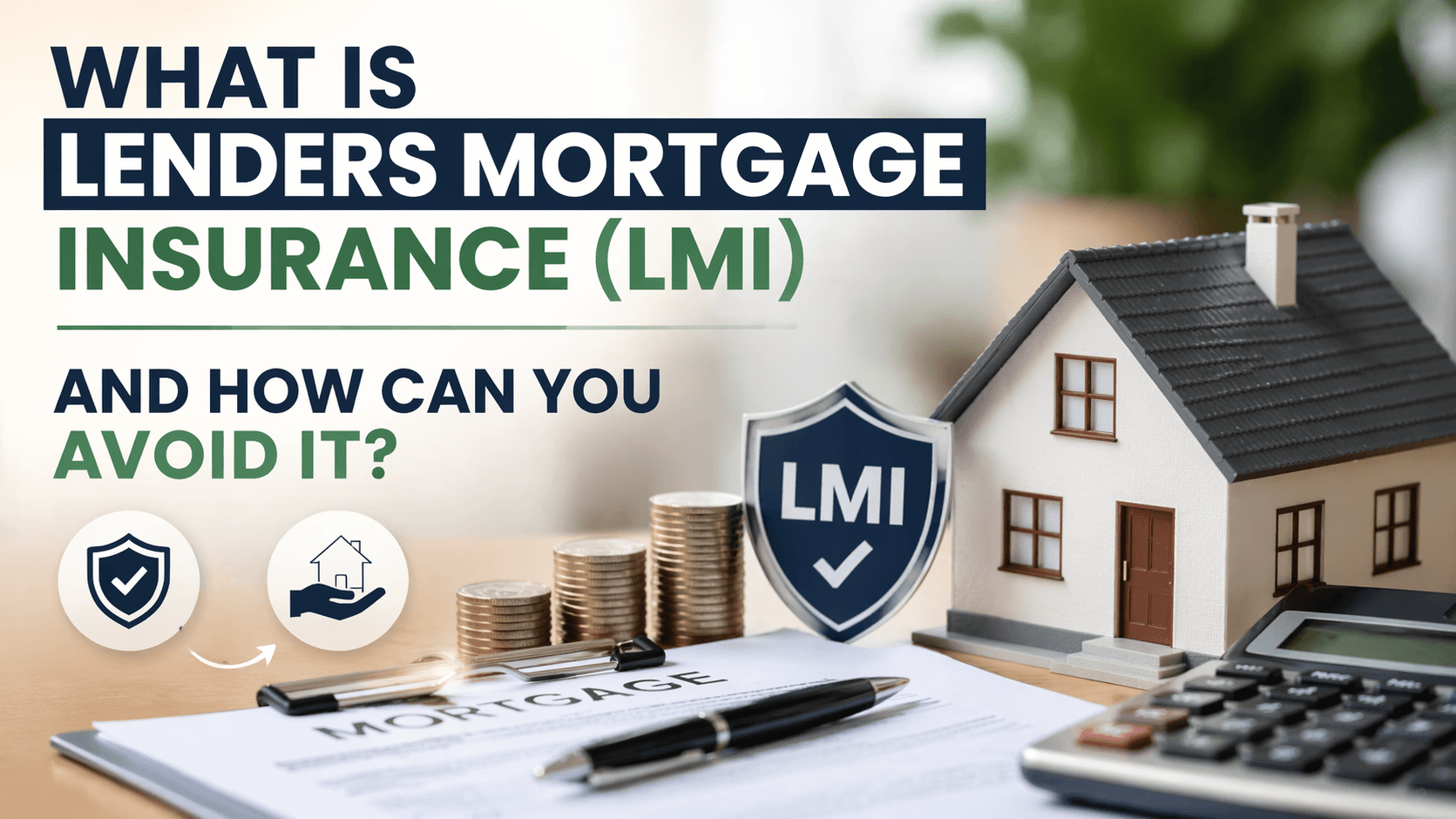
What Is Lenders Mortgage Insurance?
Lenders mortgage insurance is an insurance policy that protects the lender — not the borrower — in the event that a home loan borrower defaults on their loan and the sale of the property does not cover the full outstanding debt.
Despite the name, lenders mortgage insurance does not protect you as the borrower in any way. It protects the bank or lender from financial loss. Yet in almost all cases in Australia, it is the borrower who pays the lender’s mortgage insurance premium — either as a lump sum at settlement or by having it added to the loan balance.
Lenders mortgage insurance is typically required by Australian lenders when a borrower’s loan-to-value ratio (LVR) exceeds 80%. In simple terms, if you are borrowing more than 80% of the property’s purchase price — meaning your deposit is less than 20% — your lender will almost certainly require lender’s mortgage insurance before approving your loan.
For example, if you are purchasing a $650,000 home with a 10% deposit of $65,000, your LVR is 90%. Because this is above the 80% threshold, the lender’s mortgage insurance will apply unless you qualify for an exemption or government scheme.
How Does Lenders Mortgage Insurance Work in Australia?
Here is a step-by-step explanation of how lenders mortgage insurance works in practice:
- You apply for a home loan with an LVR above 80% — meaning your deposit is less than 20% of the property’s purchase price.
- The lender arranges lenders mortgage insurance through a specialist LMI provider — typically Helia (formerly Genworth) or QBE LMI in Australia.
- The lenders mortgage insurance premium is calculated based on your loan amount and LVR. The higher the LVR and the larger the loan, the higher the premium.
- You pay the lenders mortgage insurance premium — either as an upfront lump sum at settlement or by capitalising it into your loan balance.
- If you default and the property sells at a loss, the LMI provider pays the lender the shortfall. The insurer can then seek to recover that amount from you — the borrower.
This last point is critical and often misunderstood. Lenders mortgage insurance does not release you from your financial obligations. Even if the insurer pays out a claim on your behalf to the lender, they can still pursue you to recover the money. You pay for a lender’s mortgage insurance, but it does not protect you.
How Much Does Lenders Mortgage Insurance Cost in Australia?
The cost of lenders mortgage insurance in Australia depends on several factors:
- Your total loan amount
- Your LVR — the higher the LVR, the higher the lenders mortgage insurance premium
- The LMI provider your lender uses
- Whether the property is owner-occupied or an investment
- The state or territory in which you are purchasing
To give you a general sense of the potential cost, here are some approximate lender’s mortgage insurance premium ranges. These are estimates only — actual premiums vary by lender and LMI provider:
| Property Price | Deposit (10% / LVR 90%) | Approximate LMI Premium |
|---|---|---|
| $500,000 | $50,000 | $8,000 – $12,000 |
| $650,000 | $65,000 | $11,000 – $16,000 |
| $800,000 | $80,000 | $14,000 – $20,000 |
| $1,000,000 | $100,000 | $18,000 – $26,000 |
These figures show clearly why so many Australian buyers work hard to avoid lender’s mortgage insurance — it is a significant cost that adds nothing to the value of your property or your own financial protection. Use the Moneysmart mortgage calculator to estimate your potential lenders mortgage insurance costs based on your specific loan amount and LVR.
Who Pays Lenders Mortgage Insurance in Australia?
In the vast majority of cases, the borrower pays the lender’s mortgage insurance premium — even though the policy exists solely to protect the lender. This is one of the most widely misunderstood aspects of lender’s mortgage insurance in Australia.
The lender’s mortgage insurance premium can be paid in two ways:
- Upfront at settlement: Paid as a lump sum when you settle on your property, in addition to your other upfront costs such as stamp duty, legal fees, and conveyancing.
- Capitalised into the loan: Added to your total loan balance. This means you pay interest on the lender’s mortgage insurance premium over the entire life of your loan, which significantly increases your total borrowing cost over time.
Most Australian borrowers choose to capitalise lenders mortgage insurance into their loan to avoid a large upfront payment — but this approach means you end up paying considerably more in total due to the interest charged on the LMI amount across the loan term.
When Is Lenders Mortgage Insurance Required?
Lenders mortgage insurance is required by most Australian lenders in the following situations:
- Your LVR exceeds 80% — your deposit is less than 20% of the purchase price
- You are purchasing an investment property with a high LVR
- You are refinancing and your equity in the property has fallen below 20%
Some lenders apply lender’s mortgage insurance from an LVR of 85% rather than 80%, so it is worth checking the specific policy of each lender you are considering. The threshold can vary, and certain lenders offer lender’s mortgage insurance waivers in specific circumstances — such as for borrowers in approved high-income professions.
Top 10 Ways to Avoid Lenders Mortgage Insurance in Australia
The good news is that there are several genuine and practical strategies to avoid lenders mortgage insurance in Australia. Here are the top 10 ways to do it:
1. Save a 20% Deposit
The most straightforward way to avoid lender’s mortgage insurance is to save a deposit of at least 20% of the property’s purchase price. With an LVR of 80% or lower, most Australian lenders will not require lender’s mortgage insurance. While saving a 20% deposit takes longer, it means you borrow less, pay less interest overall, and avoid the lender’s mortgage insurance cost entirely.
2. Use the First Home Guarantee
The Australian Government’s First Home Guarantee allows eligible first home buyers to purchase a property with as little as a 5% deposit without paying lenders mortgage insurance. The government guarantees up to 15% of the loan, covering the gap and removing the LMI requirement entirely. Income caps and property price limits apply. Check current eligibility and participating lenders at the NHFIC website.
3. Use a Guarantor Loan
If a parent or close family member has sufficient equity in their own property, they may be able to act as a guarantor on part of your loan. This can bring your effective LVR below 80%, allowing you to avoid lenders mortgage insurance without needing a full 20% deposit of your own.
4. Check for a Profession-Based LMI Waiver
Some Australian lenders offer lenders mortgage insurance waivers for borrowers working in specific high-income professions — such as doctors, dentists, veterinarians, lawyers, accountants, and other approved occupations. If you work in one of these fields, you may be able to borrow up to 90% or even 95% LVR without paying lender’s mortgage insurance. Speak with a licensed mortgage broker to find out which lenders offer this and whether you qualify.
5. Use the First Home Super Saver Scheme (FHSSS)
The First Home Super Saver Scheme (FHSSS) allows eligible first home buyers to save for a deposit inside their super fund with tax advantages. Using the FHSSS could help you build your deposit faster, potentially reaching the 20% threshold and avoiding lenders mortgage insurance altogether.
6. Use the Regional First Home Buyer Guarantee
The Regional First Home Buyer Guarantee is a government-backed scheme that helps eligible buyers in regional Australia purchase with a 5% deposit without paying lenders’ mortgage insurance. Eligibility criteria apply, including a requirement to have lived in the relevant regional area. Check the NHFIC website for current details and available places.
7. Access a State Shared Equity Scheme
Some state governments offer shared equity programs where the government co-purchases a portion of your property, effectively reducing your LVR below the lenders mortgage insurance threshold. These schemes vary by state, and eligibility criteria and income caps apply. Check with your state government for current program availability.
8. Find a Lender With a Higher LMI Threshold
Not all lenders apply lenders mortgage insurance at the same LVR threshold. Some lenders only require lender’s mortgage insurance when the LVR exceeds 85% rather than 80%. If your deposit sits between 15% and 20%, comparing lenders carefully may help you find one where lender’s mortgage insurance does not apply to your specific situation.
9. Use a Family Equity or Gift
Some lenders accept gifted funds from immediate family members as part of your deposit. If a family member is in a position to contribute to your deposit — either as a gift or through a family equity arrangement — this could help you reach the 20% threshold and avoid lenders mortgage insurance entirely. Lender policies on gifted funds vary, so confirm the requirements before relying on this approach.
10. Negotiate an LMI Waiver Directly
In some cases — particularly for borrowers with strong income, a clean credit history, or significant assets — a lender may be willing to consider a lenders mortgage insurance waiver or alternative arrangement. While this is not common, it is worth discussing with a licensed mortgage broker who can advocate on your behalf and knows which lenders have flexibility in this area.
Pros and Cons of Paying Lender’s Mortgage Insurance
While avoiding lenders mortgage insurance is generally advisable, paying it is not always the wrong decision. Here is a balanced view to help you assess your own situation:
| Cons of Paying Lenders’ Mortgage Insurance | Cons of Paying Lenders Mortgage Insurance |
|---|---|
| Enter the property market sooner with a smaller deposit | Adds thousands of dollars to your total borrowing cost |
| Benefit from potential property price growth sooner | Protects the lender only — offers you no financial protection |
| May make financial sense in fast-rising property markets | Capitalising LMI means paying interest on the premium for years |
| Avoids waiting years longer to save a larger deposit | Generally non-refundable if you sell or refinance early |
| Can be a practical option where government schemes are not available | Does not release you from liability if you default |
Whether paying lenders mortgage insurance makes sense for you depends entirely on your personal financial situation, your local property market, and how quickly you can realistically save a larger deposit. This decision is best made with guidance from a licensed mortgage broker or financial adviser.
Is Lenders Mortgage Insurance Tax Deductible in Australia?
For owner-occupiers, lender’s mortgage insurance premiums are generally not tax-deductible in Australia.
For investment property owners, lender’s mortgage insurance may be tax deductible — however, it is typically deducted over the lesser of the loan term or five years, rather than as a lump sum in the year it is paid. Tax rules can change and individual circumstances vary significantly, so always consult a registered tax agent for personalised advice before making assumptions about the deductibility of lenders mortgage insurance in your situation.
Common Mistakes Borrowers Make With Lenders Mortgage Insurance
- Thinking lenders mortgage insurance protects them: The most common misunderstanding. Lenders mortgage insurance protects the lender, not the borrower. You remain fully liable for the debt even if the LMI provider pays out a claim.
- Not budgeting for lender’s mortgage insurance upfront: Many buyers are caught off guard by the lenders mortgage insurance cost at settlement. Always factor it into your total upfront cost calculations from the very beginning.
- Assuming lenders mortgage insurance is refundable: In most cases, lenders mortgage insurance premiums are non-refundable. If you sell or refinance shortly after purchasing, you will not recover the lender’s mortgage insurance premium — and may need to pay it again with a new lender.
- Not checking eligibility for an LMI waiver: Many borrowers pay lenders mortgage insurance unnecessarily because they do not know they may qualify for a waiver through their profession or a government scheme.
- Capitalising LMI without understanding the long-term cost: Adding lenders’ mortgage insurance to your loan balance means you pay interest on it for the life of the loan. The actual total cost can be significantly higher than the face value of the premium alone.
- Not shopping around: Different lenders have different mortgage insurance thresholds, providers, and rates. What one lender charges for lender’s mortgage insurance may differ substantially from another.
Alternatives to Paying Lenders Mortgage Insurance
If you want to buy sooner but cannot save a 20% deposit, here are the most practical alternatives to consider before agreeing to pay lender mortgage insurance:
- First Home Guarantee: Buy with a 5% deposit — no lender’s mortgage insurance required for eligible first home buyers
- Guarantor loan: Use a family member’s property equity to remove the lenders mortgage insurance requirement
- Profession-based LMI waiver: Check whether your occupation qualifies you for a lender’s mortgage insurance waiver from specific lenders
- State shared equity schemes: Some state governments offer equity contributions that reduce your LVR below the lenders mortgage insurance threshold
- Continue saving: Reaching a 20% deposit avoids lender’s mortgage insurance entirely and gives you access to more competitive loan products with better rates
Frequently Asked Questions: Lenders Mortgage Insurance in Australia
What is lenders mortgage insurance in Australia?
Lenders mortgage insurance is an insurance policy that protects the lender if a borrower defaults on their home loan and the property sale does not fully cover the outstanding debt. Despite the borrower paying the premium, lenders mortgage insurance provides no financial protection to the borrower.
When is lenders mortgage insurance required?
Lenders mortgage insurance is typically required when your LVR exceeds 80% — meaning your deposit is less than 20% of the property’s purchase price. Some lenders apply the lender’s mortgage insurance threshold at 85% LVR, so this can vary between lenders.
Can I avoid lenders mortgage insurance with a 10% deposit?
Yes — through the First Home Guarantee, eligible first home buyers can purchase with as little as a 5% deposit without paying lenders’ mortgage insurance. A guarantor loan is another option. Without one of these arrangements, a 10% deposit will generally trigger lender’s mortgage insurance with most Australian lenders.
How much does lenders mortgage insurance cost?
Lenders mortgage insurance premiums vary based on your loan amount and LVR. For an $800,000 property with a 10% deposit, lender’s mortgage insurance could cost between $14,000 and $20,000. Actual costs vary by lender and LMI provider. Use the Moneysmart mortgage calculator to get an estimate for your situation.
Is lenders mortgage insurance refundable?
In most cases, lenders mortgage insurance premiums are non-refundable. If you sell your home or refinance to a new lender shortly after purchasing, you generally cannot recover the lenders mortgage insurance premium you paid. Some lenders may offer partial refunds in specific circumstances — always check the terms of your loan.
Does lender mortgage insurance protect the borrower?
No. Lenders mortgage insurance protects the lender only. If you default and the lenders mortgage insurance provider pays out a claim to the lender, the insurer can still seek to recover that amount from you as the borrower.
Can lenders mortgage insurance be waived?
Yes, in certain circumstances. Some lenders waive lender’s mortgage insurance for borrowers in approved high-income professions such as doctors, dentists, lawyers, and accountants. Government schemes like the First Home Guarantee also effectively remove the lenders mortgage insurance requirement for eligible first home buyers.
Where can I get help with a lenders mortgage insurance dispute?
If you have a complaint about a lender’s mortgage insurance that you cannot resolve directly with your lender or LMI provider, you can lodge a free complaint with the Australian Financial Complaints Authority (AFCA) — Australia’s free and independent financial dispute resolution service.
Is lenders mortgage insurance the same as mortgage protection insurance?
No — these are two very different products. Lender’s mortgage insurance protects the lender if you default. Mortgage protection insurance is a separate, optional product that protects you — the borrower — by covering your repayments if you lose your job, become seriously ill, or pass away. Only lender’s mortgage insurance is compulsory when your LVR exceeds 80%.
Can I claim lenders mortgage insurance as a tax deduction?
Owner-occupiers generally cannot claim lenders mortgage insurance as a tax deduction. Investment property owners may be able to deduct lenders mortgage insurance over five years. Always consult a registered tax agent for advice specific to your personal situation.
Conclusion: Understanding and Avoiding Lenders Mortgage Insurance
Lenders mortgage insurance is one of the highest — and most misunderstood — costs in the Australian home buying process. It can add tens of thousands of dollars to your loan, and yet it provides absolutely no direct financial protection for you as the borrower.
The good news is that with the right strategy, many Australian home buyers can avoid lenders’ mortgage insurance entirely — through government schemes like the First Home Guarantee, guarantor arrangements, profession-based waivers, shared equity programs, or simply by saving a 20% deposit before purchasing.
Understanding how lenders mortgage insurance works, what it truly costs, and how to avoid it puts you in a far stronger position when comparing home loan options in Australia. Take the time to explore every avenue available to you, check your eligibility for applicable schemes, and speak with a licensed mortgage broker before committing to any loan product.
Ladabo.com is here to help you understand lenders mortgage insurance and all aspects of home loans in Australia — in clear, jargon-free language with no sales pressure. Compare your options and make informed decisions with confidence.
Suggested Internal Links:
- Top 10 Home Loans for First Home Buyers Australia
- First Home Guarantee Explained: How to Buy With a 5% Deposit in Australia
- Fixed vs Variable Home Loans: Which Is Right for You?
- How to Improve Your Credit Score Before Applying for a Home Loan in Australia
- Home Loan Pre-Approval in Australia: A Step-by-Step Guide for First Home Buyers
Explore our blog for expert tips, loan guides, and practical advice on managing money in Australia.







Leave a Reply
You must be logged in to post a comment.